
Healthy people, healthy forests, healthy planet: how Skoll 2026 confirmed what we already knew
Heading into my second Skoll World Forum, I was thinking about the uncertainty that shaped last year’s gathering. Across the sector, sudden funding shocks and a changing political landscape had created real anxiety. Many conversations carried the weight of scarcity, uncertainty, and difficult choices about how organizations would sustain their work. So I arrived this year wondering whether that same sense of pressure would dominate the week. But lo and behold, things were totally different and in a positive way! People were genuinely collaborative; there was a real sense of community and togetherness, echoing what our Co-CEO, Ashley Emerson, said during HIH’s Marmalade Festival session: “We either all scale together or not at all.”
I arrived at this Skoll week having packed my impostor syndrome with the rest of my belongings, but I had packed a bunch of other things too: curiosity, a willingness to take up space as a woman in planetary health, a feeling that I belonged, and the firm knowledge that thriving communities and a thriving planet cannot be separated from one another.
What I left with gave me more hope in the work we’re doing at HIH and optimism that it’s not too late to turn things around at a global scale: the climate and conservation sectors are finally catching up to what Indigenous Peoples, Afro-descendants, and local communities have been saying for years. It is finally being heard and echoed in international fora.
Nature needs people (and people need nature!)
People need nature to thrive. It’s no secret, although humans in many parts of the world have severed our reciprocal connection to nature in favor of destructive and extractivist practices. But… does nature need people?
NATURE NEEDS PEOPLE. This was written in capital letters in my notebook before I even sat down for the first session. It became the week's refrain.
The traditional conservation movement emerged from the West and had a completely different story to tell. It wanted to designate fully protected “natural” areas which would be untouched by humans and thus “conserved”. This led to the displacement and land dispossession of many Indigenous Peoples, Afro-descendants, and local communities around the world. A harmonious co-existence between nature and people was deemed unthinkable by many traditional conservation scientists from the West, while in reality, Indigenous Peoples, Afro-descendants, and local communities have been stewarding the world’s most biodiverse and climate-critical ecosystems since time immemorial.
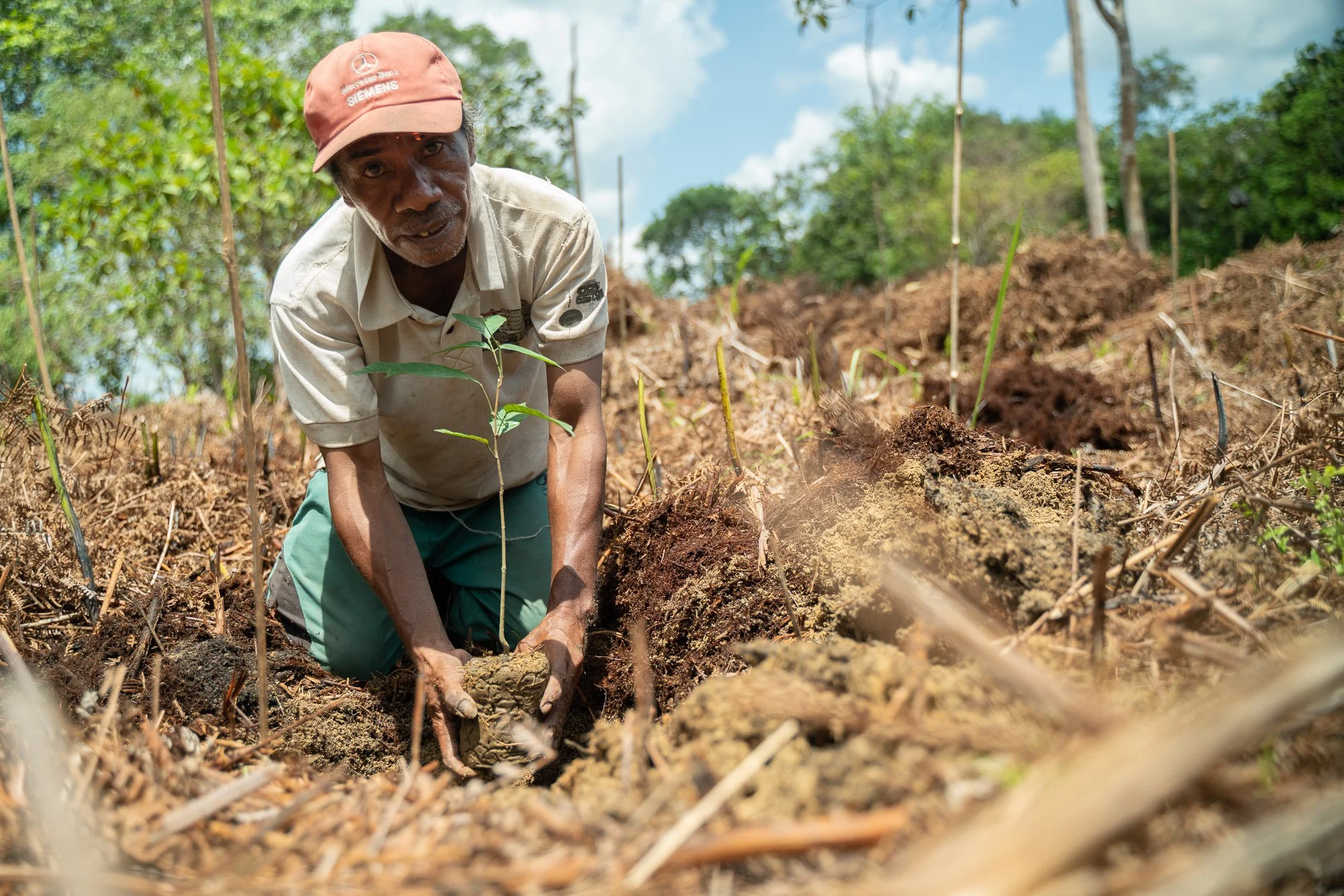
Centuries of colonial and extractivist practices in the world’s richest natural landscapes are still causing massive suffering both to people and planet. Communities cannot thrive when they’re struggling to survive due to a compounded crisis inherited from colonial and extractive legacies. Not only did that cause large-scale poverty, food and economic insecurity, a lack of healthcare access, but an unprecedented climate crisis that has completely changed the way of life of hundreds of millions of people living in some of the world’s most climate-vulnerable ecosystems. They’re the communities affected by drought, by hurricanes, storms, cyclones, melting glaciers, who cannot sustain the livelihoods they’ve pursued for generations. They cannot feed their families and themselves dependably because drought is killing their livestock, which cannot graze, poisoned rivers are making fishing impossible, and erratic rain patterns are making their harvests unsustainable. They’re the women who have to walk for kilometers to fetch water for their families, contaminated water that they burn firewood to boil and sanitise. Pollutants from the firewood burning then contaminate their lungs day in and day out. Communities are facing the catastrophic effects of a climate crisis they did not create, but are the first to experience.
People need nature. But nature needs people, too. This is why, 20 years ago, HIH’s founder, Kinari Webb, was in Indonesian Borneo asking local community members who were cutting down the forest just to survive, “What do you need to thrive in harmony with the forest?” The communities spoke, and she only listened. Communities started designing interconnected solutions that addressed healthcare, livelihoods, food security, and forest protection, all at the same time. Ten years later, Stanford University analysed the decade-long data and found that an astounding impact was generated from investing in community-designed solutions for both nature and people.
Conservation and climate action cannot be separated from the people who make it possible. The sector is beginning to understand this, but Indigenous Peoples, Afro-descendants, and local communities have always known it.
Women are the backbone of climate action, so why aren’t they treated as such?
Before making my way to the UK, I had decided that Mary Robinson’s “Climate Justice: A Man-made Problem with a Feminist Solution” would be my read during commutes. In addition to echoing the unjust realities of women who are carrying the disproportionate burden of climate change, it also painted a colorful picture of women leaders around the world who took matters into their own hands and decided to do something for the deteriorating ecosystems they were stewarding and that their communities relied on for their very survival.
Across a wide range of organizations and participants, a common theme emerged: women are leading community-development efforts. Whether it’s through reinvesting their sustainability-generated income into their kids' education and future livelihoods or through pooling their resources with other women’s into community funds, women are propelling progress and are thinking about collective thriving and leaving a healthy ecosystem behind for their descendants. Women were also recognized at Skoll for being the guardians and keepers of ancestral wisdom and traditional ecological knowledge passed down from generations of women before them. One thing was clear though, before women can give back to their communities and lead community thriving efforts, they have to be well-resourced. They have to thrive.
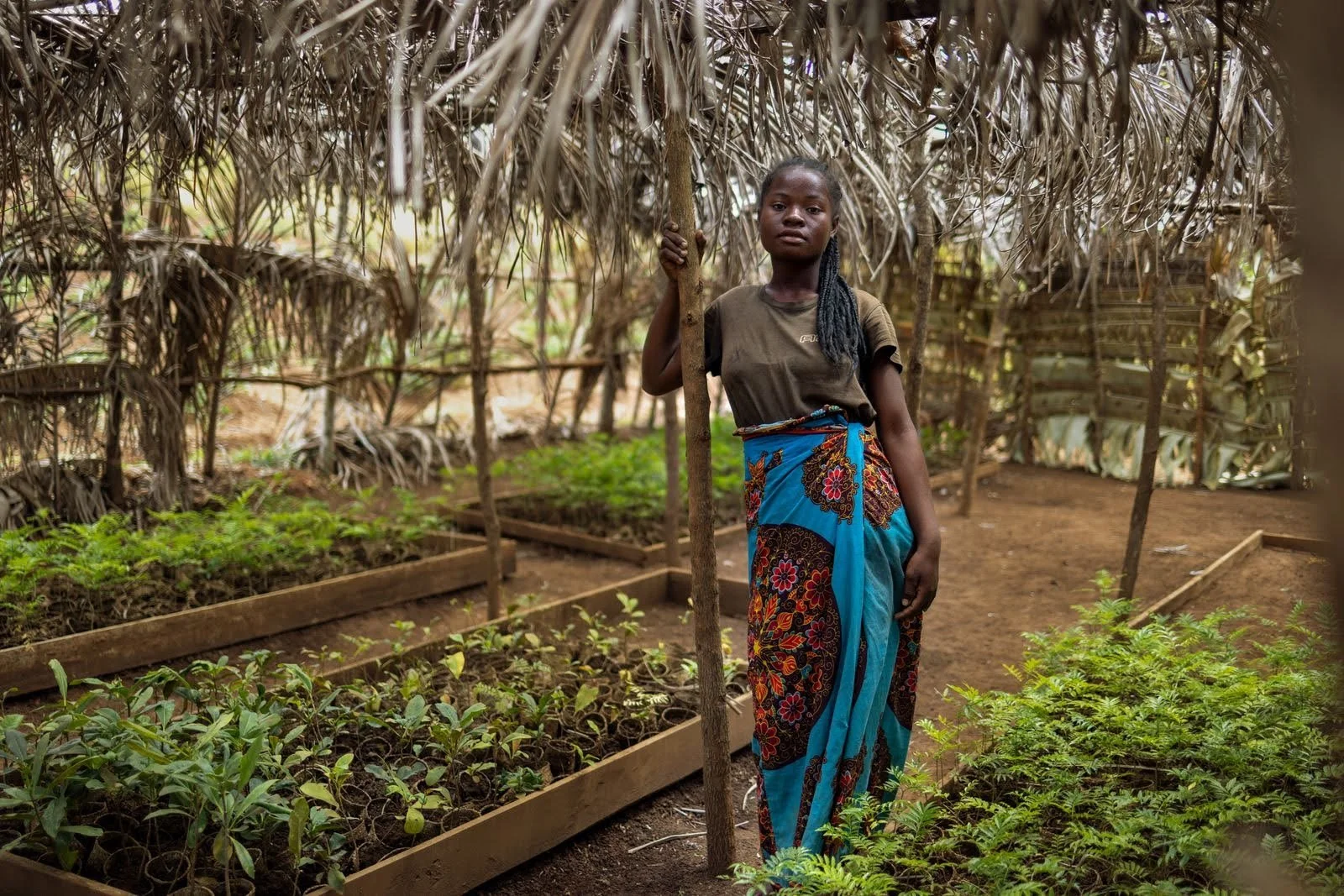
Across HIH’s different programs, we see this consistently. In the Brazilian Amazon, Guajajara women are leading territorial defence and ecosystem restoration. In Madagascar, female Health Guardians are delivering frontline health services, while stewarding forest governance, including cervical cancer screening in very remote areas where women wouldn’t have access to it in a country where cervical cancer is the most prevalent cancer amongst women. In Indonesia, women lead eco-polybag weaving groups that supply materials for forest rehabilitation.
The evidence is clear: women are simultaneously leading climate action and community resilience, so why do they remain overlooked and under-resourced? Climate finance very clearly does not center women, and it’s not only unjust for it, but also ineffective. Women bear the brunt of the climate crisis; 158 million could be pushed into extreme poverty by 2050 and yet fewer than 15% of national climate plans even mention gender. Only a third of UNFCCC delegates are women. This needs to change. Gender cannot only be an afterthought or a niche domain within the conservation and climate spaces. It is a scientific and ethical imperative that gender considerations be mainstreamed across all phases of climate-related programming, with real non-tokenistic participation from the women at the frontlines who are experiencing the worst that the climate crisis has to offer while simultaneously leading the efforts to combat it.
This is why this year, HIH is building a gender portfolio that will demonstrate what gender-transformative planetary health looks like in practice.
We all want to scale, but should we?
This year’s Skoll, scale was in the air. The word “scale” and its derivatives could be found in almost every session and conversation. Scale had everyone infatuated, no matter the sector or geography. But what even is scale? And should you scale?
Let’s start with what scale isn’t. Scale isn’t growth. It doesn’t mean more staff or a bigger budget necessarily. It doesn’t even mean your program being replicated across many contexts. Scale is change. It’s chaotic, slow, non-linear, unpredictable, and more importantly, it means letting go. Letting go of control, of your “model”, of your method, of you as the implementer. Scale is accepting not being in control. It’s communities at the center. Scale is essentially resourcing others to carry out self-determination.
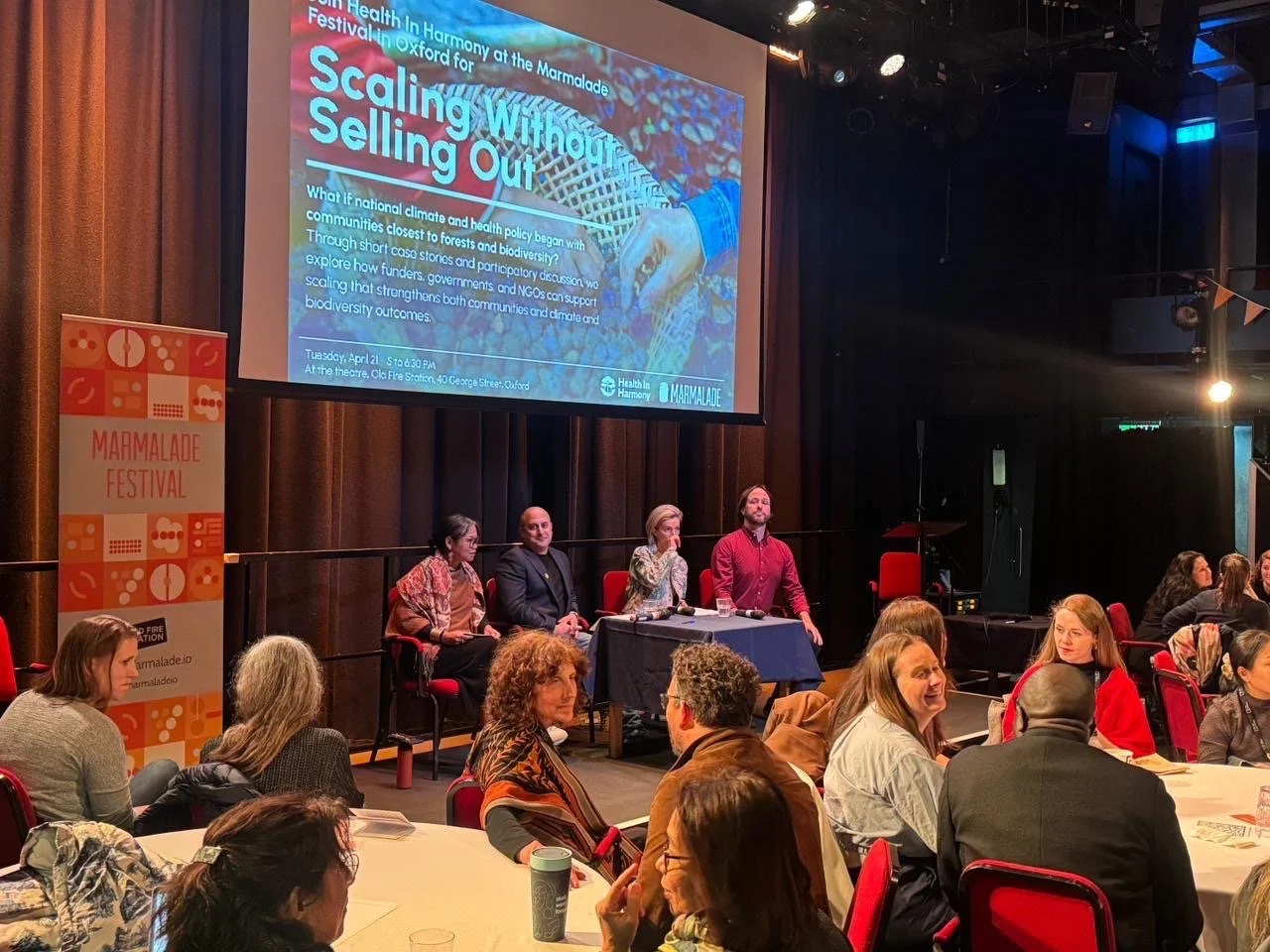
At our own Marmalade session — “Scaling Without Selling Out” —, ASRI’s Chairperson of the Board of Directors put it beautifully: “communities don’t resist scale, they resist losing control of their own future.” During the session, we also explored this tension directly. When you scale through government, you protocolize. But the thing that makes community-led conservation work is precisely the thing that resists protocolization: trust, listening, community authority. Our approach has been to embed community-designed protocols within government systems, not the reverse, to insert the community’s process into the institution, rather than letting the institution overwrite the community.
Local to global: funding climate solutions at the source
The final thread that ran through the week was a question of architecture: how do money, power, and decision-making actually reach the communities that are doing the work and most affected by the climate crisis?
Our colleagues at Planet Indonesia noted that intermediaries rarely connect grassroots grantees to the decision-makers who shape funding flows and called for it to change. The ask was clear and unanimous: fund organizations, not projects. And critically, ensure that climate and biodiversity finance reaches communities directly and is not filtered through layers of institutional overhead.
This is the advocacy agenda Health In Harmony carried to COP30 in Belém last November, and the one we will bring to more international convenings in 2026: we demand from funders fair and direct access to climate finance for Indigenous Peoples, Afro-descendants, and local communities. We uphold Indigenous rights and self-determination as foundations of planetary health. And finally, we demonstrate, with evidence not only that it is a moral imperative to invest in community-designed solutions, but that they are also the most cost-effective, scalable, and durable climate solutions we have.
In the days since Skoll, my inspiration and enthusiasm have not weakened, despite the infamous post-Skoll exhaustion and plethora of follow-up tasks. The different conversations at Skoll confirmed what the communities we work beside have known all along: thriving people = thriving planet. SWF showed me that this year the sector is one step closer to finally listening to communities and trusting the paths they conceive towards self-determination, and to acknowledging women’s leadership and contributions to climate justice and resilience.
Funders know what they need to do. Can they do it fast enough to match the urgency of the climate crisis?