
We Marched, We Listened, We Demanded Change: Key Takeaways from COP30
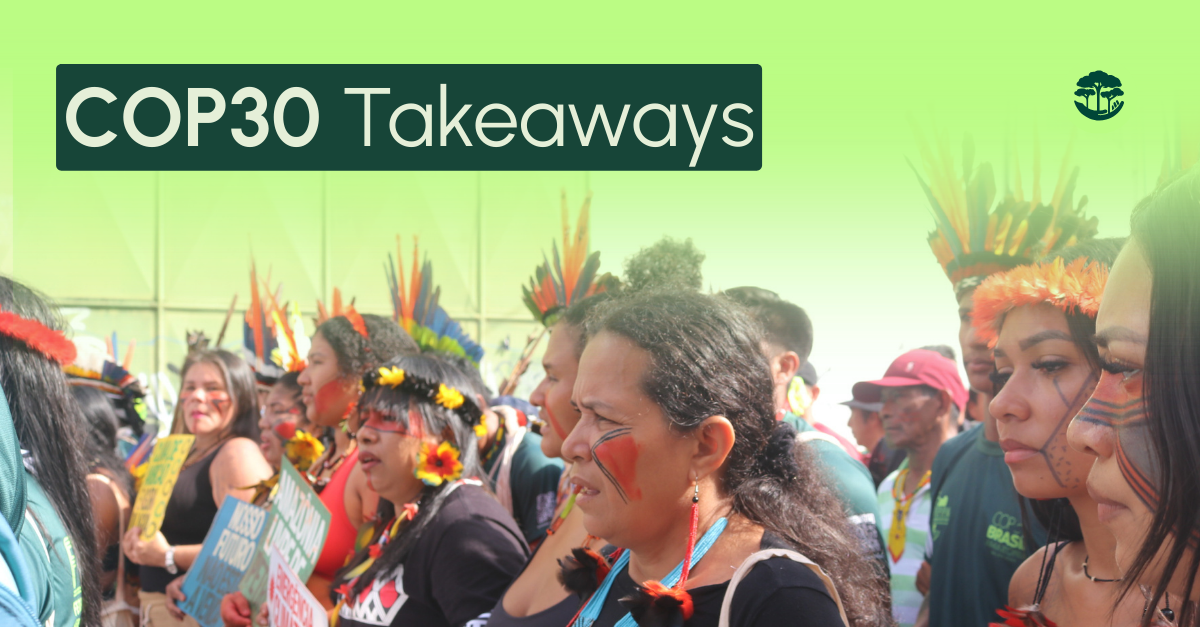
Taking place in Belém, the gateway to the Brazilian Amazon, the 30th Conference of the Parties (COP) of the United Nations Framework Convention on Climate Change promised to be the “COP of Truth” and the “COP of Forests”. Unfortunately, it was neither. Not calling out the hypocrisy of this COP – wrapped in forest iconography while failing to confront the drivers of destruction – would be a disservice to the communities we serve.
Fossil fuel use, energy transition, and the health of forests and populations are barely mentioned in the final documents. When it comes to fossil fuels, there is no roadmap, no timelines, just a half-hearted acknowledgement that the “global transition… is irreversible,” a statement that advances nothing and protects no one.
These gaps highlight a deeper structural reality: the COP consensus model is becoming a veto model, enabling a handful of petrostates to block global progress. As calls for a “COP reform” grow louder, so does the recognition that the formal process is no longer delivering what science and justice demand.
And yet, while the official process faltered, the movements outside the negotiation rooms – the “second COP” – advanced meaningful, hard-won gains. Indigenous Peoples, Afro-descendants, and local communities achieved historic progress on land rights, direct access to finance, and global visibility. These breakthroughs are not the result of negotiated text, rather they were secured through years of relentless advocacy and coordination, led predominantly by Indigenous Peoples.
COP30 was not the COP of truth, nor the COP of forests. But what happened around it – the gains communities fought for – marks an important moment.
Read on for our key takeaways from COP30.
1. Fund Climate Solutions at the Source: Direct Access Finance Must Be the Foundation Going Forward
COP30 saw significant attention to finance mechanisms for forests and Indigenous Peoples, Afro-descendants, and local communities, affirming HIH’s priority to demand fair and direct access to climate and biodiversity finance resources.
The new Tropical Forest Forever Facility (TFFF) represents a critical opportunity to reward forest guardianship. While it fell far short of its $125 billion goal, the TFFF mobilized nearly $7 billion. Perhaps the most important development is its landmark commitment that at least 20% of funds will go directly to Indigenous Peoples and local communities. This sets a new expectation for global finance mechanisms.
However, the true success of these initiatives will depend entirely on how communities are centered in their governance and execution. The Revaluing Ecosystem Stewardship panel addressed this directly. The conversation highlighted the fact that reciprocal relationships are key to tackling the interconnected climate, biodiversity, and health crises. HIH asserts that the TFFF’s credibility depends on ensuring communities have genuine decision-making authority, not just advisory roles, in the fund's governance.
Beyond TFFF, other finance and land commitments solidified the movement's growing power. This included the renewal of the $1.8 billion Forest Tenure Funders Group pledge and the signing of the International Land Tenure Commitment by 15 countries, pledging to recognize and protect 160 million hectares of Indigenous and local community land by 2030.
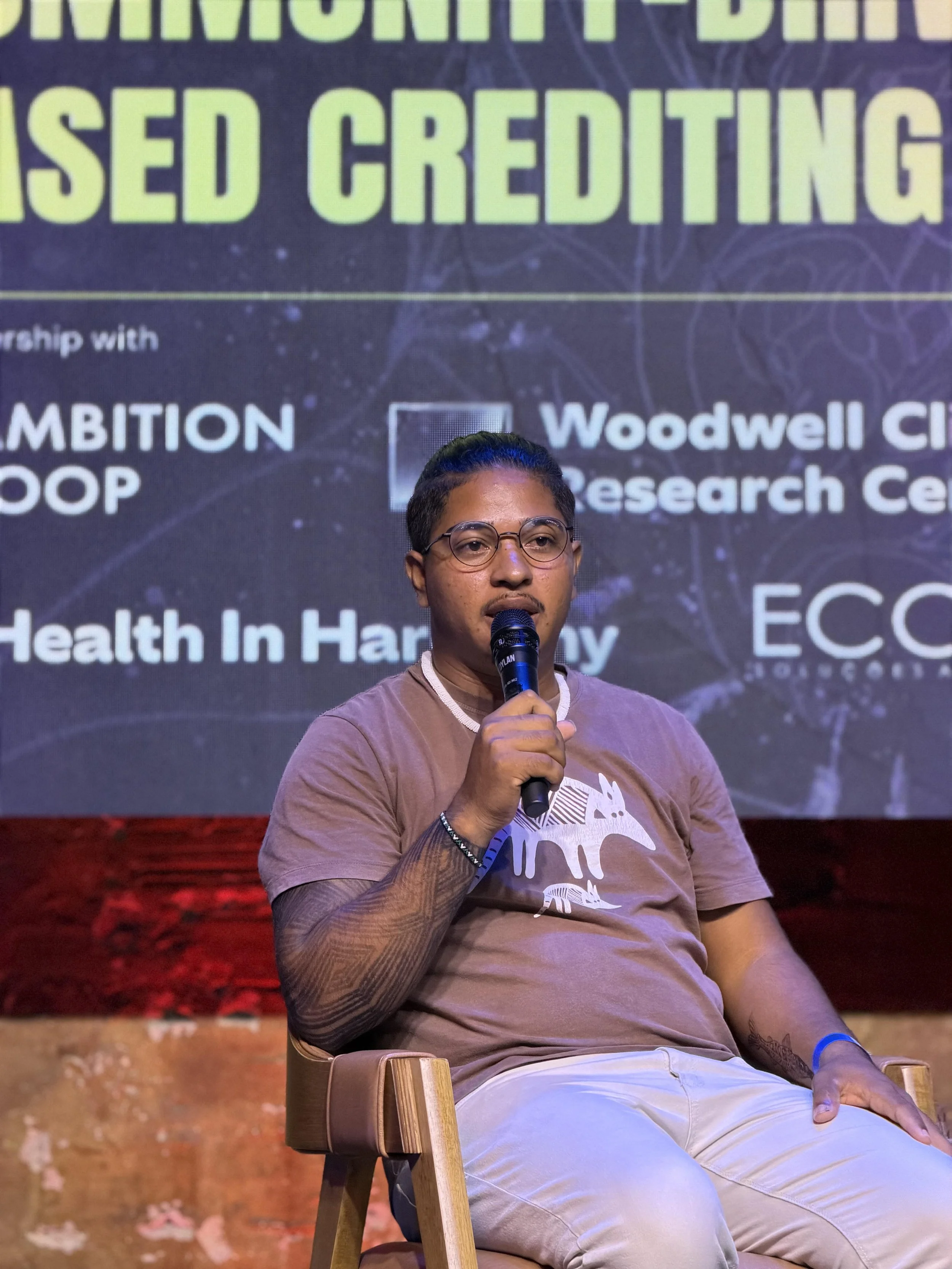
“To ignore our knowledge, to ignore the ancestral wisdom of Indigenous Peoples, is to walk wide steps to our own end.”
2. Uphold Indigenous self-determination and human rights as foundations of planetary health.
Planetary health cannot exist without justice. HIH maintains that the fulfillment of Indigenous, Afro-descendant, and local community rights, including self-determination, land tenure, and political representation, is a prerequisite for global ecological balance. Policy must embed community-led decision-making and Indigenous sovereignty as core implementation principles.
The formal negotiations exposed a structural failure to translate rhetorical support for Indigenous rights into operational policy power. In the words of Emil Gualinga of the Kichwa Peoples: “Indigenous Peoples continue to be excluded… we are often not given the floor.”
This exclusion was coupled with severe security measures. Gualinga highlighted that the heavy “militarization of the COP shows that Indigenous Peoples are viewed as threats.” This mirrors the situation in home territories where militarization occurs when communities defend their rights against extractive projects in their territories: the International Indigenous Peoples’ Forum on Climate Change (IIPFC) delivered a statement condemning the colonial militarization of their territories.
HIH reinforces its solidarity with the Indigenous-led marches and protests throughout the two weeks, recognizing that the “COP of Truth” cannot exist without centering the voices of the rainforest guardians, and denouncing the serious threats that endanger the lives and rights of Indigenous Peoples around the world.
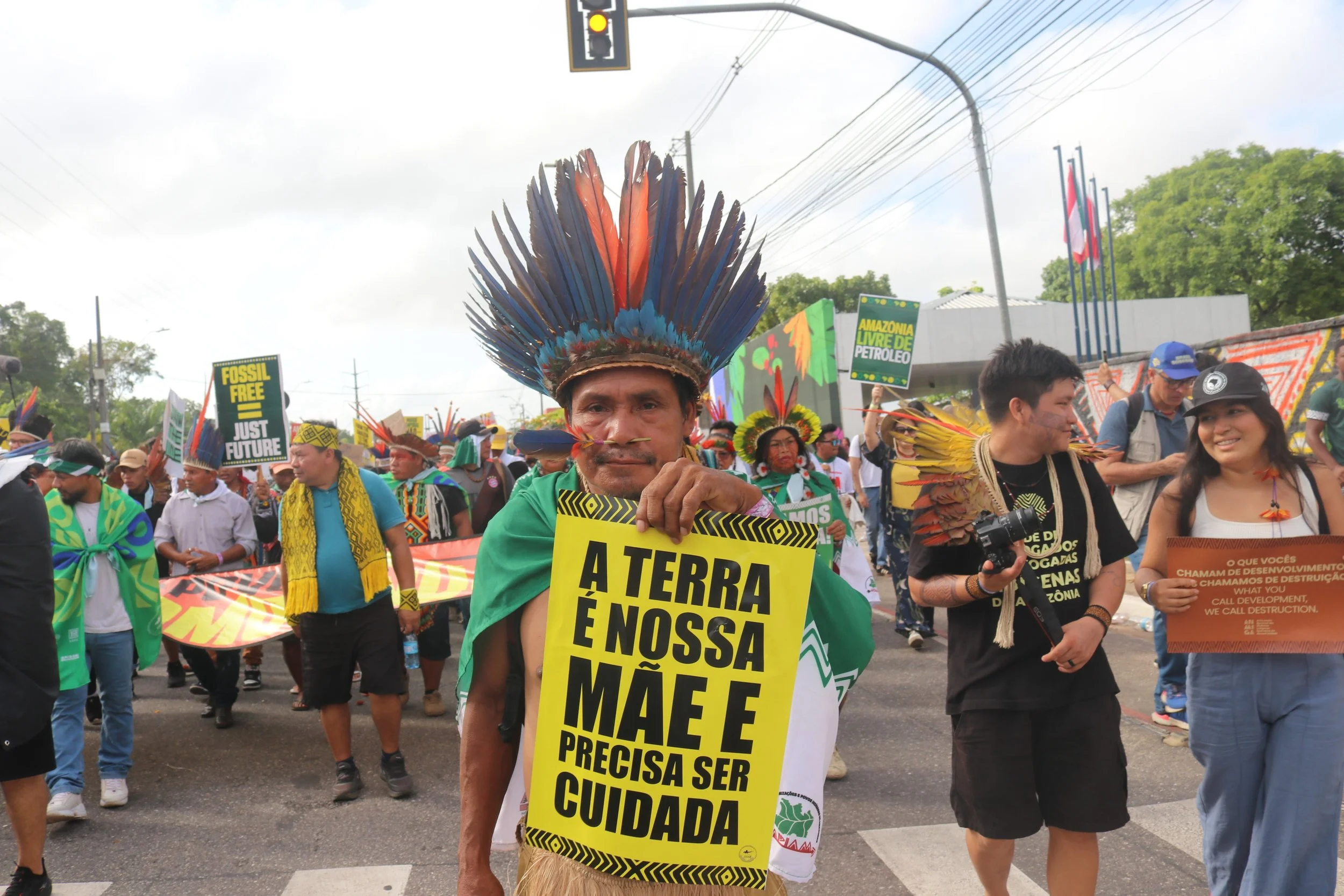
The strong visibility and well-coordinated Indigenous movement outside the formal negotiation process significantly influenced historic wins in territorial governance. HIH celebrates this outcome, which saw the Brazilian government mark COP30 with the biggest progress in Indigenous land demarcation in the last 20 years. This progress package covers more than 7 million hectares. Key achievements included:
The final formal recognition of four new Indigenous territories, including the 2.1 million hectare Kaxuyana-Tunayana territory in the Amazonian state of Pará.
The official declaration to delineate the boundaries of 10 additional Indigenous territories.
Initial studies for the identification of six more indigenous territories.
The granting of 12 new land titles to Quilombola communities in the Amazon.
This package is a testament to the tireless advocacy of Indigenous Quilombola organizations like the Coordination of Indigenous Organizations of the Brazilian Amazon (COIAB), the Articulation of Indigenous Peoples of Brazil (APIB), the Coordination of Associations of Quilombola Communities of Para (Malungu) and their allies. As Toya Manchineri of COIAB stated: “Indigenous Peoples will remain vigilant, mobilised, and present beyond COP30 to ensure that our voices are respected and that global decisions reflect the urgency we experience in our territories. For some, COP ends today, for us, territorial defence in the heart of the Amazon is every day.”
Inside the formal negotiations, the approval of a Just Transition Work Programme delivered one of the few real victories by including one of the most progressive rights-based framings ever seen in a COP decision, recognizing human rights, labor rights, and free, prior and informed consent as core to achieving climate ambition.
3. Narrative sovereignty: Recognizing Community Stories as Instruments of Justice
If Indigenous sovereignty is the inherent right of Indigenous Peoples to govern themselves and manage their lands, narrative sovereignty is an extension of this: Indigenous Peoples’ right to tell their own stories, on their own terms.
Perhaps one of the most noticeable gaps in negotiations like those at COP30 is the voices and lived experiences of Indigenous Peoples, Afro-descendants, and local communities, as well as other vulnerable people who face the consequences of the climate crisis daily. Too often, Indigenous voices are filtered through external narrators – intermediaries including researchers, NGOs, and filmmakers from outside their communities. At COP30, HIH platformed the Community Thriving Narrative films and The Xipaya Woman: Strength & Resistance by Sekamena, a content collective in the Xingu Basin, emphasizing our commitment to uplifting Indigenous narrative sovereignty.
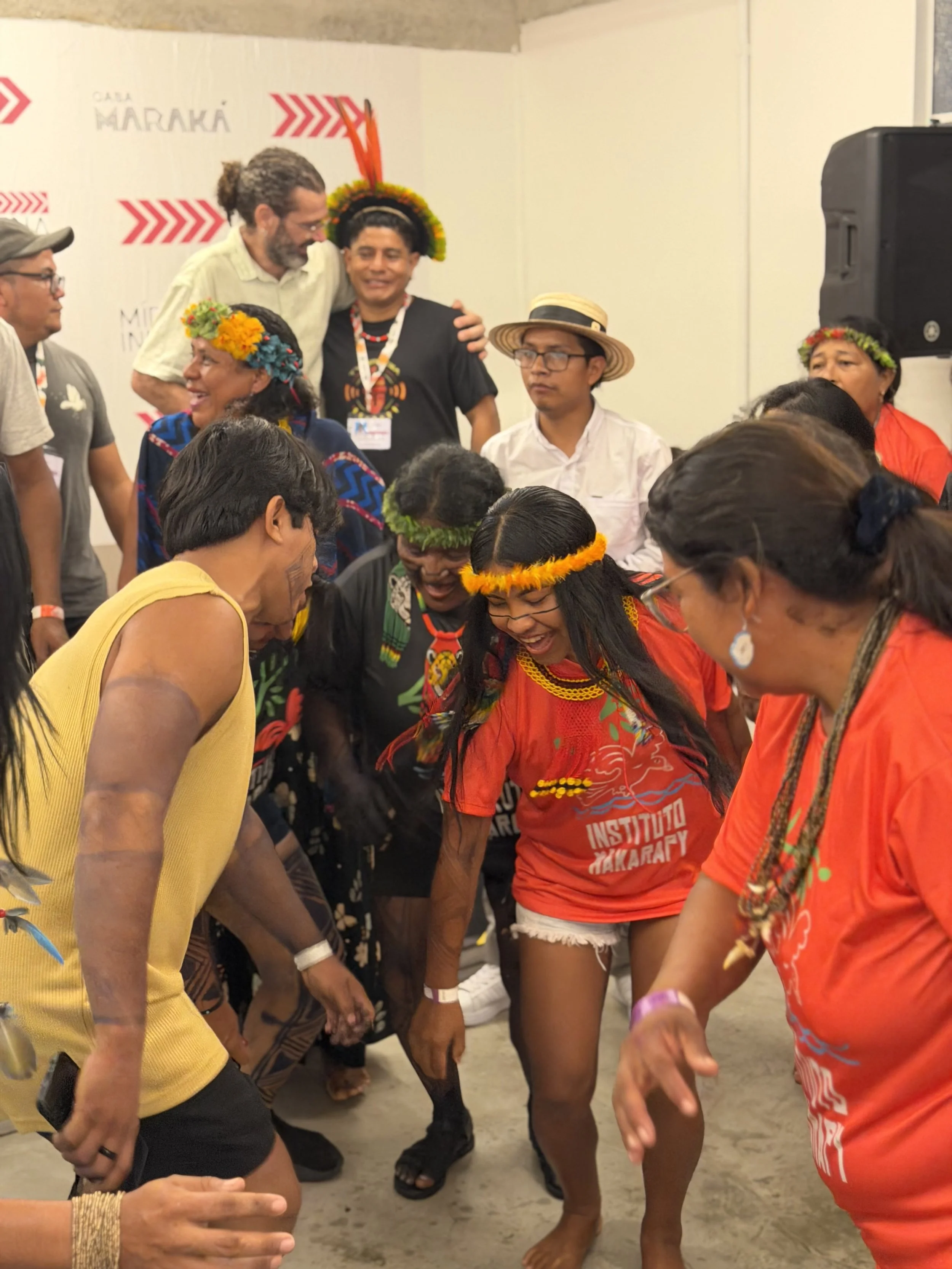
Together with If Not Us Then Who?, HIH facilitated the event “Narratives From the Territories" at the Casa Maraká space, created by Mídia Indígena. The initiative promoted reflections on the role of audiovisual media in valuing and defending Indigenous Peoples, Afro-descendants, and local communities, highlighting its power as a tool for expression, denunciation, and resistance. During the meeting, the need to strengthen the technical and artistic training of Indigenous communicators was reinforced, to ensure that they can record and disseminate stories from their own realities and perspectives. The event also opened up an exchange of experiences and strengthening of traditional and collective knowledge among panelists and attendees including Genilson Guajajara, Renan Khisetje and Suluene Guajajara.
By insisting that narratives created by Indigenous communities on their own terms be recognized as legitimate evidence, we can collectively seek to rewrite the dominant climate narrative, shifting the focus from crisis and deficit to "active hope" rooted in the proven solutions of forest guardians.
4. A call to commit to silo-breaking, systems-oriented planetary health solutions
HIH welcomes the adoption of the Belem Health Action Plan (BHAP) for the Adoption of the Health Sector to Climate Change, applauding its ambition to center health in climate action. The plan aims to strengthen the health sector’s resilience and adaptation to climate change, guided by key cross-cutting principles: health equity and climate justice, and social participation.
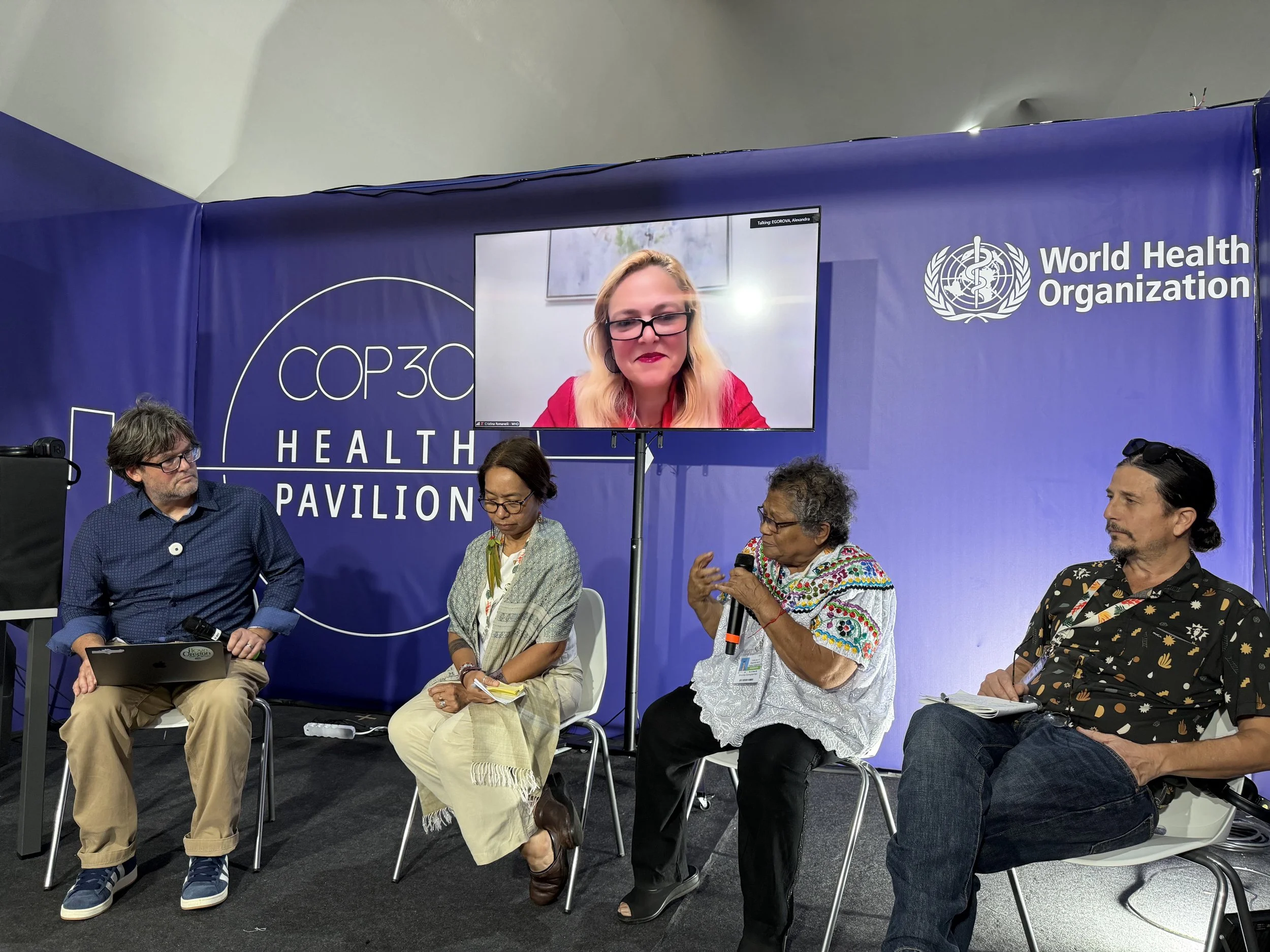
While the BHAP requires strengthening adaptation measures that safeguard the territorial rights of Indigenous Peoples and local communities as fundamental determinants of health, the plan still falls short of fully recognizing these leaders as the architects of effective health systems, not mere beneficiaries of reform. We urge BHAP implementation to embed community-led decision-making and Indigenous governance as core principles.
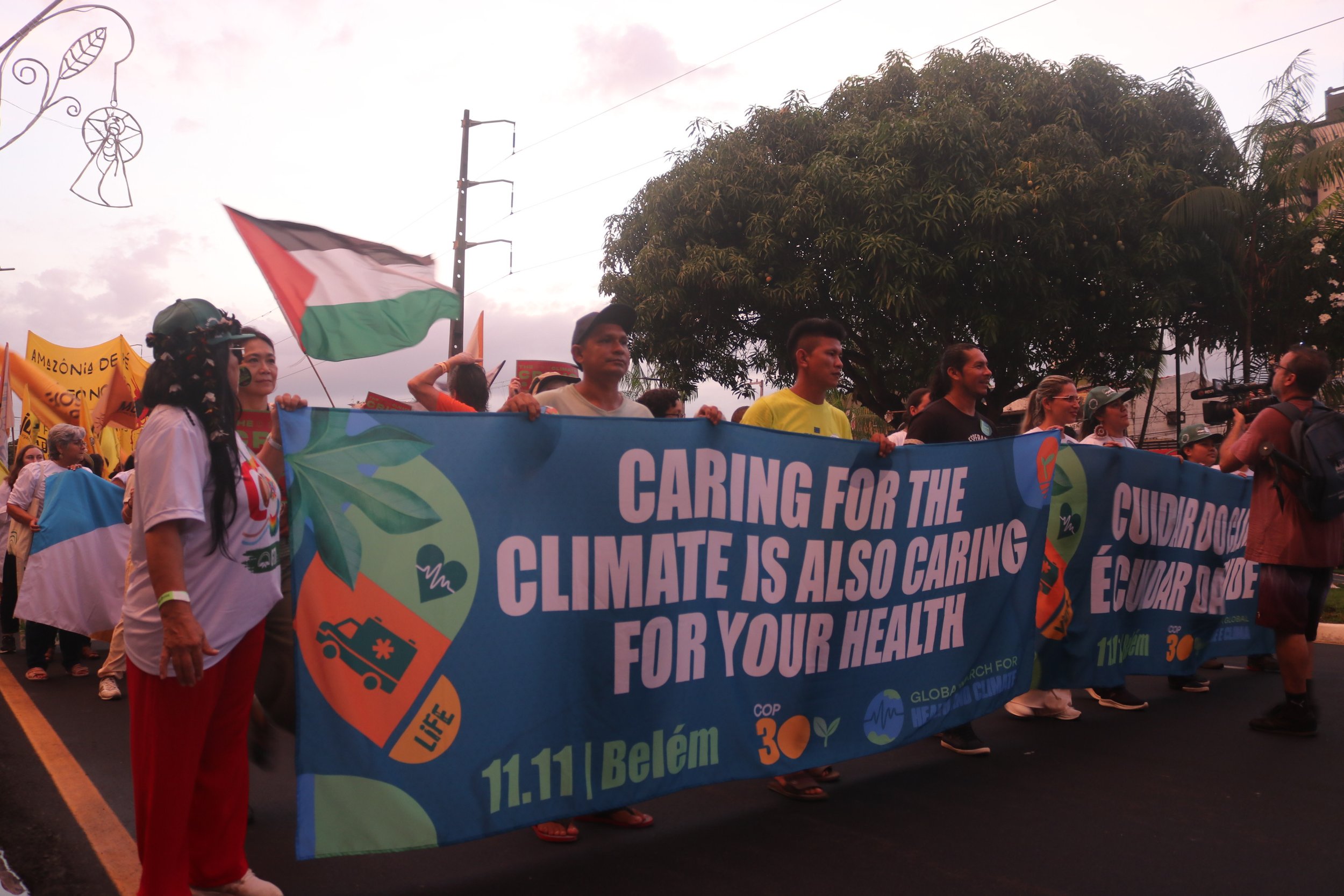
This was the call we brought into the Global March for Health & Climate on the second day of COP30, where thousands of doctors, nurses, therapists, students, and representatives of Indigenous Peoples, women’s and youth organizations, health professionals and communities came together to defend an increasingly urgent issue: health is directly affected by the climate crisis. The march also took place after the launch of Brazil’s first Health and Climate Network, of which HIH’s Brazilian affiliate SAMA-HIH is a founding member.
5. There is no future without fossil fuels phase-out
The conclusion of COP30 revealed a fundamental divide: the distance between the incremental progress secured through global dialogue and the urgency required by climate science. The conference, despite being situated in the Amazon, was ultimately perceived as a complex, chaotic, and structurally flawed process. While multilateralism survived, the final outcome, the Global Mutirão, fell short of our collective needs.
The most profound failure of the formal negotiations was the lack of progress on mitigation. The final outcome text contains no mention of fossil fuels. The expectation for COP30 was to take the commitment from COP28 to "transition away" from fossil fuels and transform it into a concrete, global phase-out roadmap. However, this roadmap was removed from the Mutirão document due to opposition from certain petrostates.
This omission, influenced by the presence of an estimated 1,600 fossil-fuel lobbyists, failed to move global climate action meaningfully forward. This failure to address fossil fuel phaseout guarantees their continued harmful impact on health and ecosystem health.
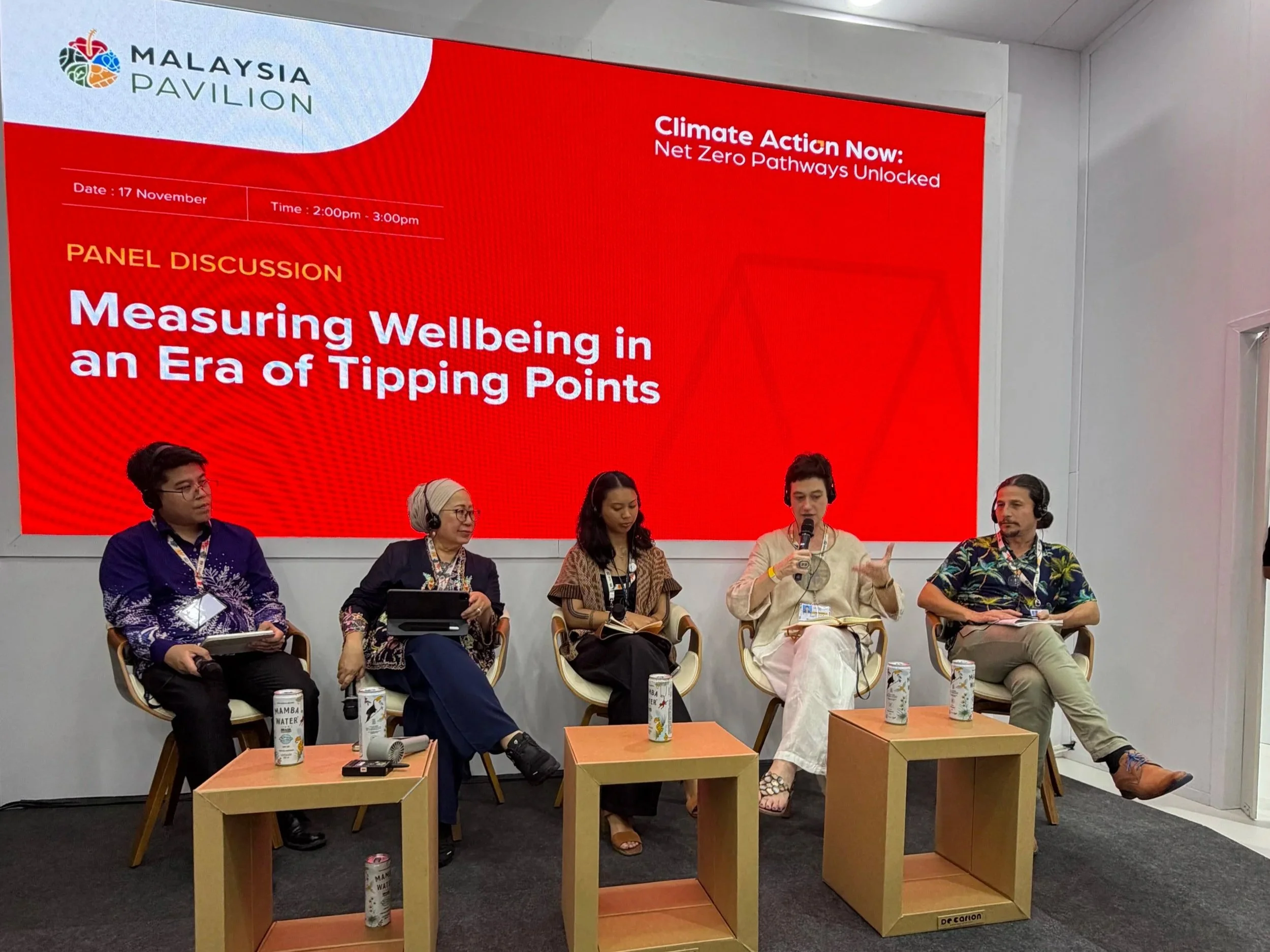
Scientists emphasize that "limiting global warming to 1.5°C is scientifically impossible if we continue to use fossil fuels." This institutional failure underscores HIH’s core campaign message: we must choose Equity Over Extractivism. We must urgently prioritize human equity and dismantle extractive systems that harm our planet. Above all else, we must fund climate solutions at the source and prioritize the voices and solutions of Indigenous Peoples, Afrodescendants and local communities.
Where Hope Thrives: Recognizing Interdependence, Choosing Equity Over Extractivism
If the formal negotiation track – the "first COP" – was discouraging, the hope and momentum came from the "second COP": the energy of civil society, Indigenous Peoples, and local actors operating outside the negotiation rooms. The palpable presence of Indigenous protests served as urgent warnings from people who safeguard some of the last intact ecosystems left on Earth. The message from cities and local governments was clear: “While you argue, we actually do things,” demonstrating an "unstoppable subnational momentum" toward resilience. These efforts, focused on tangible, local solutions, show that the answers exist.
As a planetary health organization, HIH looks beyond the incremental policy adjustments of fragmented systems. We recognize that climate change, biodiversity loss, and public health are deeply interconnected. When the BHAP fails to align explicitly with the Global Action Plan on Biodiversity and Health, it reinforces silos between conventions (UNFCCC, CBD, WHO) that must be overcome. The necessary shift toward Planetary Health requires global policy to confront the fundamental interdependence of climate, biodiversity, and human health.
Furthermore, the shift requires recognizing that solutions must be funded at the source. Global policy must embrace reciprocal funding models that recognize and resource rainforest communities and ensure fair and direct access to climate finance. This transformation requires fully empowering Indigenous governance and self-determination – Indigenous Peoples’ thriving is a fundamental determinant of ecosystem and planetary health. Their knowledge, self-determination, and land tenure rights must be protected to safeguard the life-giving ecosystems that humanity depends on. We remain vigilant and committed to the hard work ahead, remembering that everything that thrives, thrives in relationships.
Thank you to all our COP30 partners:
Nature and Culture International
Alianza Mesoamericana de Pueblos y Bosques (AMPB)
Tenure Facility
Pawanka Fund
Woodwell Climate Research Center
If Not Us Then Who?
Rights Resources Initiative
ZOVU - Action for Sustainable Development
Chico Mendes Committee
Prince Albert II of Monaco Foundation
Sunway Centre for Planetary Health
Médecins Sans Frontières (MSF)
World Health Organization
Canadian Association of Physicians for the Environment
Rockefeller Foundation
ECCON
Panakari Indigenous Association; Xipai people from Xipaya Indigenous Land
Tato'a association; Parakanã people from the Apyterewa Indigenous Land
Healthy Hospitals Project (PHS)
Sekamena Communicators Network