
Indigenous Communities Document Their Own Stories of Resistance Through Groundbreaking Filmmaking Partnership
Community Thriving Narratives Initiative Trains Forest Defenders to Share Their Realities Ahead of COP30
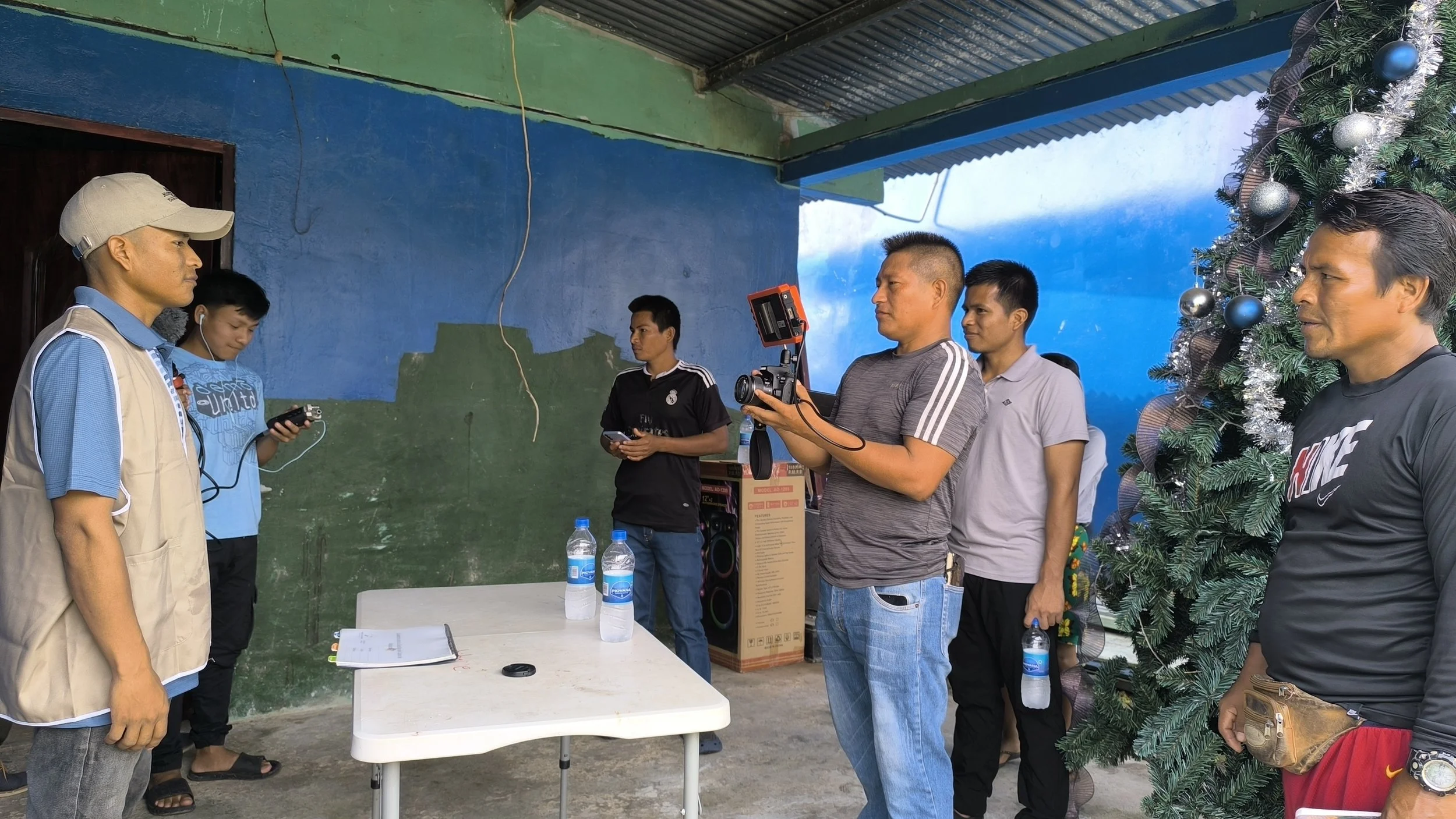
As world leaders prepare for COP30 in Brazil this November, Indigenous communities protecting the world's tropical rainforests too often have been telling their conservation stories through intermediaries, researchers, NGOs, and filmmakers from outside their communities. A groundbreaking new partnership is changing that dynamic, training forest guardians to become filmmakers and document their own realities in their own words. Health In Harmony (HIH), in collaboration with If Not Us Then Who? (INUTW), has launched the Community Thriving Narratives (CTN), training 40 community members from three Indigenous communities in Panama to become filmmakers. The initiative is part of a broader project involving the FSC Indigenous Foundation and Ulu Films, and is supported by IDB Labs funding.
The timing is critical. Indigenous Peoples, Afro-descendants, and local communities manage lands containing 80% of Earth's remaining biodiversity, yet their voices are often filtered through external narrators. And across Latin America, these communities increasingly face complex challenges – from government policies affecting their territories to migration pressures and resource conflicts – that demand authentic, community-led storytelling.
"Indigenous Peoples, Afro-descendants, and local communities are the world's most successful conservationists," said Ashley Emerson, co-CEO of Business and Scale for Health In Harmony. "But they've been forced to tell their stories through intermediaries. Community Thriving Narratives changes that. We're providing resources for communities to document their own realities, advocate for themselves, and reach policymakers and the public directly."
With COP30, the "Action COP" convening in Brazil this November, six short films from Panama's CTN program will be screened at policy spaces and throughout the conference to reach decision-makers and the global public.
From Cultural Preservation to Documenting Resistance
When filmmaking training began in Darién province's Arimae, Alto Playón, and Puerto Lara communities in eastern Panama, participants initially planned to document cultural traditions such as traditional face painting, water management and language preservation. But when Panama passed Law 462 reforming social security in March 2025, and communities faced state repression during protests, water crises, and migration-related issues, they chose to document their current realities instead.
Through multiple three-day in-person workshops led by Indigenous filmmakers from Ulu Films, participants learned to create short films using smartphones and editing software. Three trailers have been released: "Arimae: the Fight is our Resistance", documenting peaceful protests against Law 462 and state repression; "Alto Playón: Consequences of Migration", focused on water contamination and disease outbreaks; and "Puerto Lara: Water is Life", a reflection of the community's ongoing water supply crisis.
"This is a storytelling workshop where you can tell the story you want to tell," said Yurshell Rodriguez, Director of Global Trainings at If Not Us Then Who? "Sometimes protecting nature looks like this – communities facing social crisis, confronting governments and economic systems that want to exploit the forest while still stewarding biodiversity. Having an Indigenous person training them who has experienced the same struggles, the people feel safe to tell their story and really absorb the skills."
The Human Story Behind the Data
CTN platforms Indigenous voices and narrative sovereignty alongside Health In Harmony's broader work with rainforest communities in Panama. While HIH's monitoring, reporting, and verification (MRV) system, developed with partners including Woodwell Climate Research Center, WildMon, and Savimbo, quantifies conservation impact through biodiversity credits and scientific data, CTN captures what those numbers cannot: the lived experiences, cultural knowledge, and daily realities of the communities protecting these forests.
The same Panama communities conducting camera trap monitoring and bioacoustic surveys to document 73 unique species are now telling their own stories about why this work matters and what protecting their territories and the forest actually requires. Together, the quantitative data and community narratives create a complete picture of Indigenous-led conservation.
What's Next
The training program will continue throughout next year with communities creating more films, building a social media presence and growing their own audiences. The partnership is expanding CTN across three critical rainforest basins—the Amazon, Southeast Asia, and the Congo—over the next three years, with work already beginning in Brazil's Amazon rainforest.
Watch all six films and access additional resources at the Community Thriving Narratives Media Kit or view them on INUTW's YouTube playlist.