
Walking Among Forest: Lessons from Madagascar
By Mahardika Putra Purba, Conservation Program Manager, Health In Harmony
For two and a half weeks, Conservation Program Manager Mahardika Putra Purba and ASRI Forest Monitoring Coordinator Agus Supianto immersed themselves in the daily work of HIH’s Malagasy affiliate HIH-FAMI. Here, they report on their trip.

When our plane touched down in Madagascar last September, the warm air carried a familiar scent of rain, earth, and salt. I had come from ASRI in Indonesia, travelling across oceans to join HIH-FAMI, a journey that took days but felt like a homecoming. For two and a half weeks, myself and Agus Supianto, ASRI’s Forest Monitoring Coordinator who travelled with me, immersed ourselves in the rhythm of this island: learning, sharing, and co-creating with HIH-FAMI’s passionate team. This trip wasn’t just about training or field visits. It was about seeing how a shared Planetary Health mission - healing the connection between people and nature, takes root in a different landscape. The visit focused on three main areas, i.e: (1) Reforestation and climate-resilient nursery management; (2) Monitoring and Evaluation (M&E) through Logical Framework workshops; and (3) Livelihood strengthening with a planetary health perspective.
Strengthening Capacity and Collaboration
Our first days in Farafangana were spent in lively discussions about reforestation. Together, we explored how to bring forests back to life, one level of degradation at a time.
Level 1: Protecting natural regeneration - helping the land heal itself through Forest Guardians and sustainable livelihoods.
Level 2: Assisted Natural Regeneration – guiding nature’s recovery where it needs a little help.
Level 3: Full replanting – the patient art of choosing the right species and nurturing new growth.
We held a workshop on Forest Guardian monitoring, introducing tools such as Global Forest Watch and Google Earth Pro for tracking forest disturbances. The following days were spent in the field visiting reforestation sites and nurseries in Mananarano, Takoandra, Mahatsinjo, Analameloka, and Anivorano, where we discussed nursery design, maintenance routines, procurement processes, and climate resilience strategies.
Building Climate-Resilient Nurseries
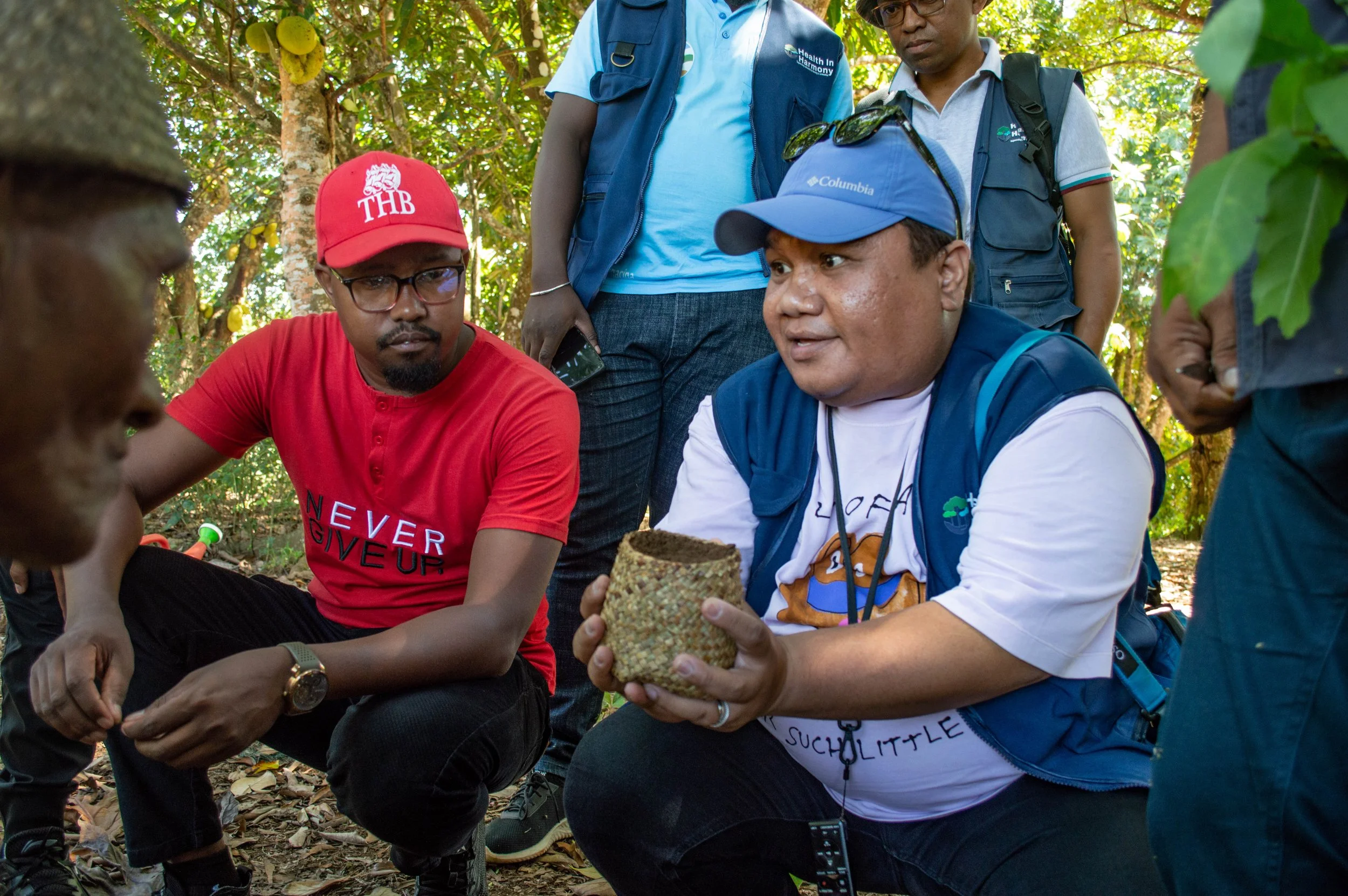
In Ikongo, we have worked closely with the team to build a new nursery using eco-polybags made from banana stems, a sustainable and biodegradable alternative to plastic throughout 2025. We also supported the rebuilding of four existing nurseries in Manombo and helped plan for one additional nursery, ensuring they are designed to withstand Madagascar’s frequent tropical cyclones. Mapping potential reforestation sites in Ikongo especially, was another critical step to identifying suitable areas for restoration efforts.
Empowering Livelihoods, Strengthening Communities
Madagascar’s forests are interwoven with its people. Every seed planted, every fish raised, every bee cared for, all of it carries the same intention: to live well without destroying the earth. Our field visits and workshops on livelihoods focused on understanding local community activities, such as fish farming and beekeeping in Analameloka, fish farming and nursery management in Anivorano, and Agriculture and handicraft weaving in Mahatsinjo. Agus and I provided input and suggestions on improving fish farming systems, compost making, sourcing materials for handicrafts, and enhancing beekeeping techniques.
At the end of the week, the team conducted a Livelihood Workshop and debrief session with the entire FAMI-HIH staff. Together, we explored “how can we make health, livelihood, and conservation truly inseparable?” The answers came not from PowerPoint slides but from lived experience, from farmers, fishers, and forest guardians who already understand that a healthy life begins with a healthy forest.
Measuring What Truly Matters
A major highlight of the trip was the Monitoring and Evaluation (M&E) Workshop, where we used a Logical Framework (LogFrame) to help the team refine program indicators, outcomes, and timelines. The session aimed to make M&E a more participatory process, enabling each program (Forest Guardians, Reforestation, and Livelihood) to define its own indicators and data collection methods. Together, with the conservation team and Forest Guardians, we redesigned the Eco-status “color code” system so it reflects what is happening on the ground. We also:
Collected field input on which indicators create the most forest pressure.
Revised the scoring system from a simple presence/absence to a point-based indicator system (1–4 points based on frequency of occurrence).
Proposed Radical Learning (RL) sessions with communities to co-create solutions for improving their colour status through livelihood actions.
Encouraged agroforestry and alternative livelihoods (e.g., fish farming for protein, fire-free land management to replace tavy practices).
Discussed adding positive indicators, such as training participation and program implementation, to balance disturbance monitoring.
Looking Ahead: Sustaining Support and Coordination
Our trip concluded with a dinner meeting to discuss the annual plan with the Conservation Manager and the conservation team. Even amid logistics and spreadsheets, there was a quiet sense of unity. We are separated by oceans, yet our teams are bound by one purpose: to protect forests and improve lives through the principles of Planetary Health. All protocols will remain living documents, ensuring flexibility and shared ownership among team members.
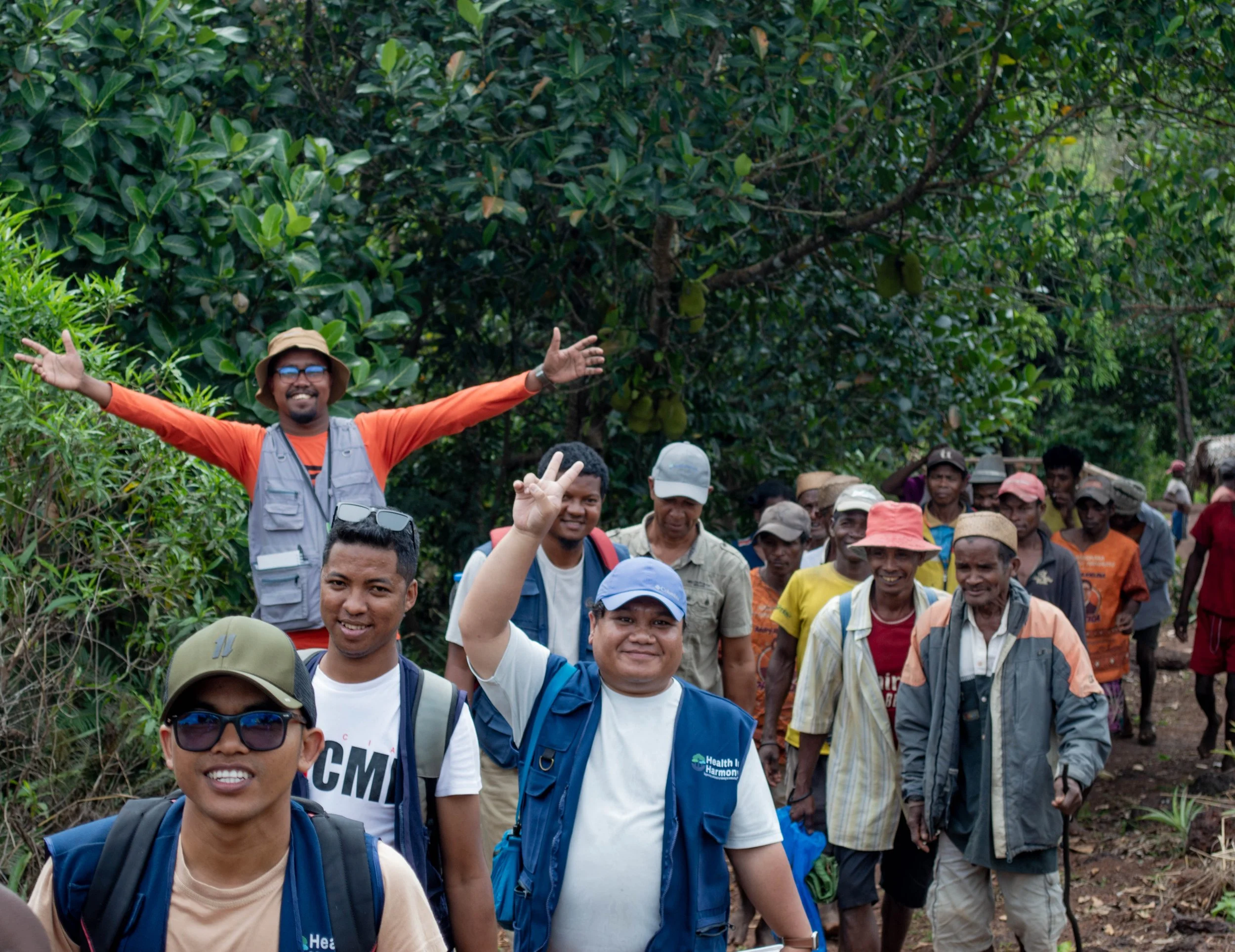
One Forest, One Planet
This trip reminded me once again of the power of collaboration across borders. Despite differences in landscape and language, our mission remains the same: to heal the connection between people and nature. Working side by side with the HIH-FAMI team, from building nurseries to co-designing monitoring systems, reaffirmed that the health of forests and communities is inseparable. Together, we continue to learn, adapt, and act. Because in the end, there is no “their forest” or “our forest.” There is only one. One forest at a time, one planet for all.