
Riverine Women Leading the Fight Against Gender-Based Violence
Written by Health In Harmony’s Grants Portfolio Manager, Dr. Farah Nabil, this piece details how SAMA-Health In Harmony is supporting Riverine women in the Brazilian Amazon to lead the fight against gender-based violence in the middle Xingu Basin. SAMA-HIH used its Radical Listening approach to center women's voices– and in 2026, the initiative is expanding its gender-equality work.
Since 2019, SAMA-Health In Harmony has been working alongside middle Xingu Basin communities of the Brazilian Amazon Rainforest, specifically in the Extractive Reserves (RESEX) of Rio Iriri, Rio Xingu, and Riozinho do Anfrísio. These regions have long been impacted by extractivist activity, especially in terms of shaping gender dynamics and injustices. The construction of the Belo Monte hydroelectric dam (operational since 2016) on the Xingu River had alarming consequences on gender-based violence in the region, through a process that many researchers described as a “re-patriarchalization” of the territory. This term refers to how megaprojects implemented in regions without the adequate infrastructure can lead not only to an objectification of the land and its resources (including its Indigenous and local population) but also to an increase in the masculinization of public spaces, which in turn perpetuates and augments gender inequalities (Cruz Hernández & Jiménez, cited in Marin & Oliveira, 2016; Freire, Lima & Silva, 2019).
In order to build the dam, 20,000 workers (predominantly men) had to be brought into the Altamira region, which led to a population boom from 100,000 to 145,000 people in under a year. This caused real estate and other commodities to catastrophically increase in price, making the region unlivable and overwhelming its infrastructure further. The large influx of male workers masculinized public spaces around Altamira, including the regions where SAMA-HIH works. This masculinization led to a sharp increase in the demand for sex work, in addition to the sexual exploitation of adolescents and children. As a result of the increasing gender inequalities, women and girls’ mobility and autonomy were exceedingly limited, where they found themselves involuntarily confined to homes or other private spaces to maintain their physical, sexual, and psychosocial safety.
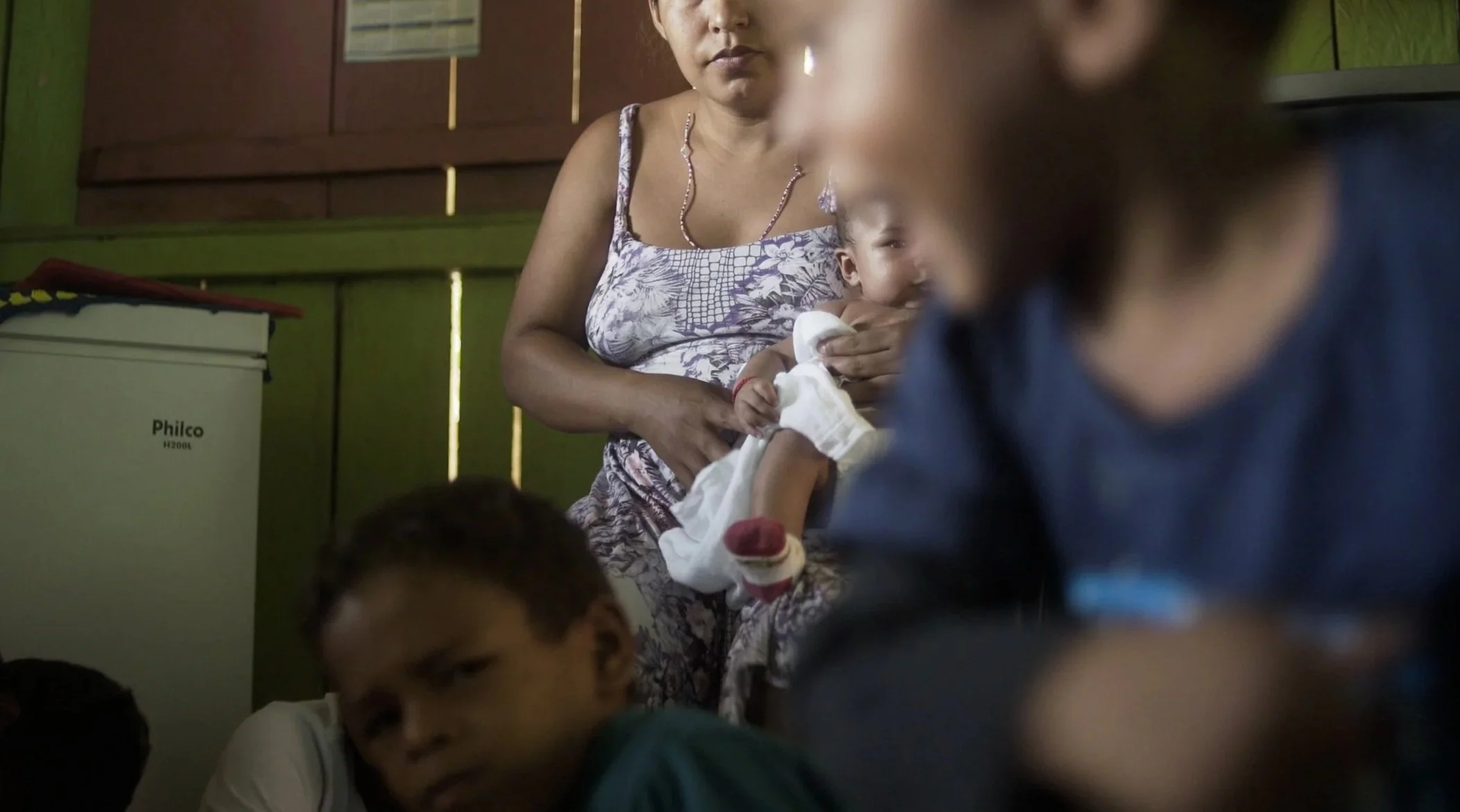
This is in line with a process that scholar Federici described as “social enclosure” in 2004. It is the phenomenon where women and girls can only exist in private spaces, reinforcing gender-based segregation of public spaces, which are consequently occupied almost solely by men (Federici, 2004). This type of imposed segregation leads to the subordination of women, girls, and nonbinary individuals by men. This situation led to a surge in the rape of women and girls, where 610 cases were reported between 2010-2014, and per capita rape rates grew by 525.9% between 2007 and 2013 (Barroso, 2019; Reis & Souza, 2016), causing Altamira to rank as one of the most violent cities in Brazil as of 2022, and the 28th in terms of sexual violence on a national scale in 2023. Economic collapse followed soon after the dam’s completion, as more than 50,000 male workers left the region. This crash also unfavourably impacted the livelihood and economic autonomy of women (Borges, 2025).
The downstream repercussions of this masculinization-sexual exploitation and violence-confinement of women and girls chain of events continue to this day to negatively impact the health and wellbeing of the communities’ women that SAMA-HIH works alongside. The geographic isolation of women living in the RESEX is consistently named as an enabling factor that increases domestic violence and other forms of gender-based violence. Other structural barriers, such as a lack of law enforcement presence in the area and low internet connectivity, further disempower survivors of gender-based violence (Nascimento, 2024; Revista FT, 2024). Across many Riverine communities along the Xingu River, there are no formal support structures for survivors, such as a shelter, psychosocial support center, etc. Even if the women and girls choose to travel to the city of Altamira to seek care, they may not find it, as gender-based violence is widespread, and there aren’t enough resources to assist all those who are impacted.
SAMA-HIH has been employing its Radical Listening approach since its inception. This methodology centers the communities’ needs and priorities as defined by them, and it offers the necessary support for community members to design their own holistic solutions to address their identified problems. When Radical Listening was practiced with the RESEX communities, the women spoke up about the violence they face. This was not a predetermined conversational category, but an issue that emerged organically as the communities gathered and spoke about challenges. Riverine women explicitly named gender-based violence and mental health support as key priorities to address, and SAMA responded. SAMA listened to the proposed solutions to address gender-based violence and the mental health of the women, men, boys, and girls of the Riverine communities, as conceived by community members themselves. This work is supported by Dr. Erika Pellegrino, SAMA’s Health Advocacy Consultant and Founding Member, and a renowned researcher for her work studying the psychological impacts caused by the Belo Monte dam’s construction. Dr. Pellegrino’s research reports a systematic under-documentation of gender-based violence all over Brazil’s health system (Pellegrino, 2023), which is notably reflected in the territories where SAMA operates. This is how SAMA’s support of the Riverine women closes the gap between the lived realities of women and girls of the RESEX and the institutional recognition, or lack thereof, of said realities.
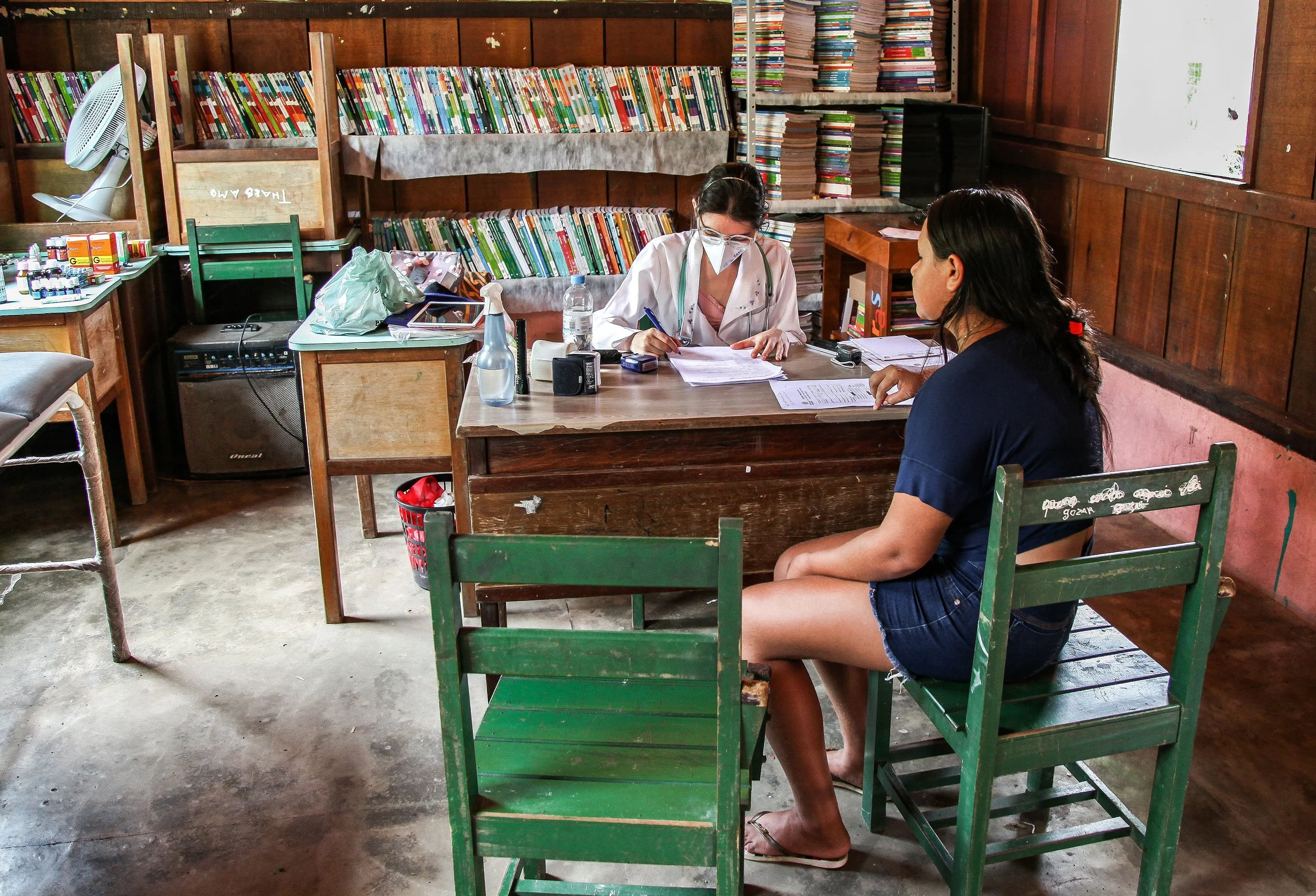
In 2026, SAMA is operationalizing a string of activities designed by the Riverine women. At the community level, meetings with women will be held across the three RESEX with which SAMA works. These meetings will be a safe space to discuss sexual and reproductive health, including female-based contraception, gender-based violence, gender inequalities, and collective income-generation by women. The meetings will focus on the conception of community-designed strategies to prevent gender-based violence as well as provide care and support to its survivors. The strategies will be informed by Dr. Pellegrino’s expertise in psychiatry, psychology, and gender-based violence.
At the clinical practice level, SAMA is implementing telemedicine visits to provide psychological support to any and all Riverine women and men who seek mental healthcare. Telemedicine is actively closing geographic and mobility gaps for Riverine communities who cannot access healthcare otherwise. SAMA is actively hiring a psychologist, funded through the sustainable development plan for the Xingu region (PDRSX). The anchoring of these gender equality-focused positions within a governmental funding framework is deliberate. It proactively ties the sustainability of the gender-based violence response to public policy rather than leaving it fully dependent on philanthropic cycles.
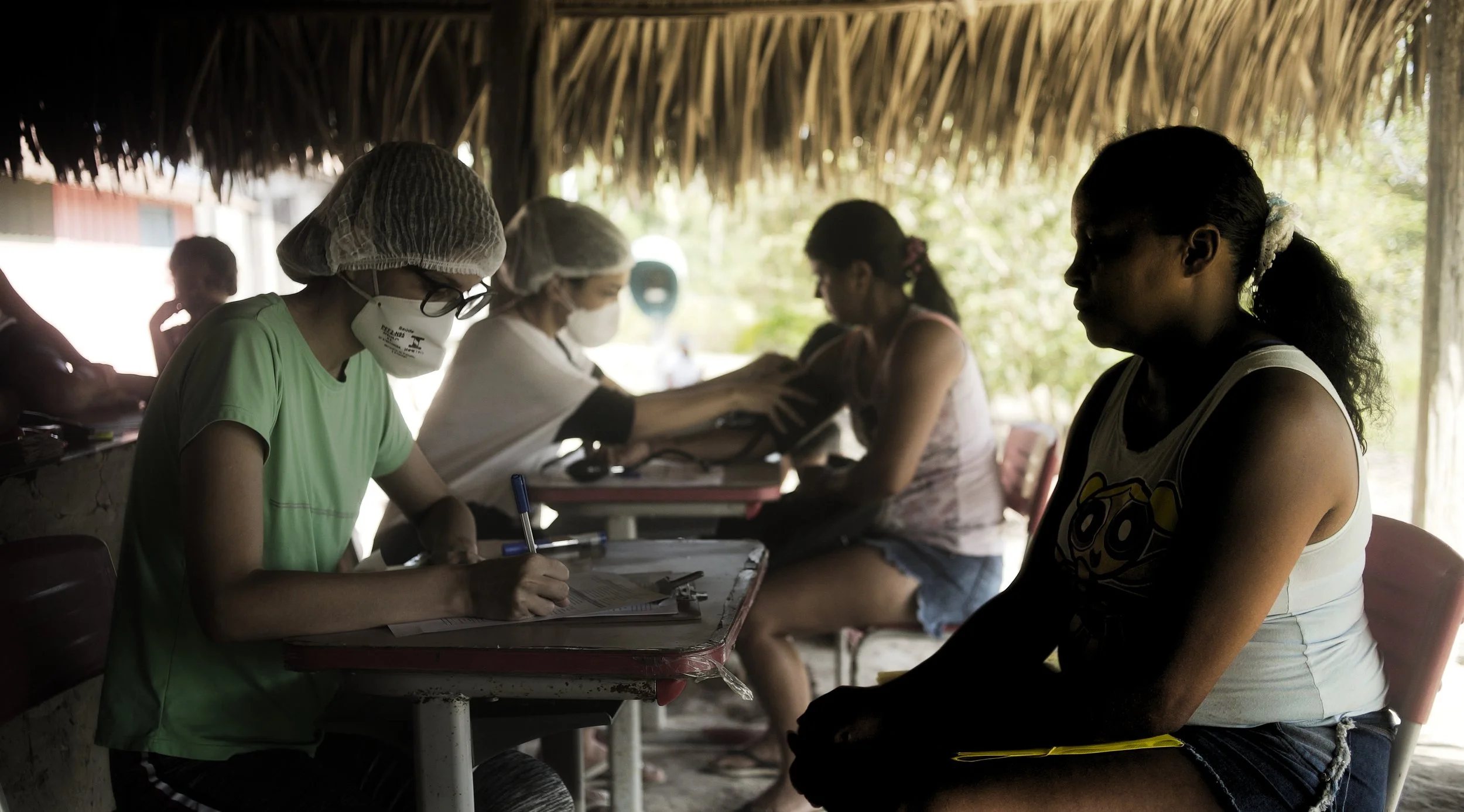
Moving forward, SAMA is planning on hiring an advocacy specialist who can further place pressure on state institutions to provide Riverine women with the services that they are constitutionally owed, although of which they are perpetually deprived.
With telemedicine actively addressing disparities in mental healthcare for Riverine women, and the community-designed solutions supported by SAMA actively working to combat gender-based violence, SAMA Health In Harmony is demonstrating gender-responsive planetary health in action. The Riverine women are speaking up and showing the world how they are advocating for their equal rights and collectively designing and implementing solutions that address their community’s wellbeing. In the RESEX of the middle Xingu, women are not only healing their forests and waterways, but also the fabric of safety and dignity that extractivism has so viciously torn.
References:
Barroso, M. F. (2019). Violência estrutural contra mulheres em Belo Monte: o que os dados oficiais não revelam [Structural violence against women in Belo Monte: what official data does not reveal]. Em Pauta, 43(17), 140–154. Available at: https://www.e-publicacoes.uerj.br/revistaempauta/article/view/42509/29822
Borges, A. (2025, April 12). Belo Monte, promessa de desenvolvimento, se diz refém de violência e facções em Altamira. Folha de São Paulo. Available at: https://www1.folha.uol.com.br/cotidiano/2025/04/belo-monte-promessa-de-desenvolvimento-se-diz-refem-de-violencia-e-faccoes-em-altamira.shtml
Federici, S. (2004). Caliban and the Witch: Women, the Body and Primitive Accumulation. Autonomedia.
Freire, L., Lima, J., & Silva, E. (2019). Belo Monte: facts and impacts involved in deployment of hydroelectric power plant in the Amazon region. Sociedade & Natureza, 30(3), 18–41. Available at: https://seer.ufu.br/index.php/sociedadenatureza/article/view/36036
Iniciativa Negra. (2024). Realidades invisíveis: política de drogas, megaprojetos e a sobrevivência de mulheres negras cis, trans e travestis na Amazônia paraense [Invisible realities: drug policy, megaprojects, and the survival of Black cis, trans, and travesti women in the Pará Amazon]. Iniciativa Negra por uma Nova Política sobre Drogas. Available at: https://iniciativanegra.org.br/publicacao/realidades-invisiveis/
Marin, R. E. A., & Oliveira, A. C. (2016). Violence and public health deterioration in the Altamira region during the construction of the Belo Monte hydroelectric plant. Regions & Cohesion, 6(1), 116–134. Available at: https://www.jstor.org/stable/26661896
Nascimento, G. S. (2024). As mulheres ribeirinhas e os estudos acadêmicos sobre violência [Riverine women and academic studies on violence]. Trabalho de Curso (Bacharelado em Direito), Faculdade de Direito, Instituto de Ciências Jurídicas, Universidade Federal do Pará, Belém. Available at: https://bdm.ufpa.br/items/c1f4cb4f-127d-4ee7-8ba5-6120b53f9435
Pellegrino, É. F. C. (2023). Sofrimento psíquico e Belo Monte [Psychic suffering and Belo Monte]. MESPT — Mestrado Profissional em Sustentabilidade junto a Povos e Terras Tradicionais, Universidade de Brasília. Available at: https://sumauma.com/wp-content/uploads/2025/05/Pellegrino-Sofrimento-psiquico-e-Belo-Monte.pdf
Reis, J. F., & Souza, J. L. (2016). Grandes projetos na Amazônia: A hidrelétrica de Belo Monte e seus efeitos na segurança pública. Dilemas, Revista de Estudos de Conflito e Controle Social, 9(2), 215–230. Available at: https://revistas.ufrj.br/index.php/dilemas/article/view/7730
Revista FT. (2024). A violência contra mulheres ribeirinhas [Violence against riverine women]. Revista FT (ISSN 1678-0817). Available at: https://revistaft.com.br/a-violencia-contra-mulheres-ribeirinhas/