
New Study Published in Environmental Challenges Links Unsafe Water and Climate Threats to Public Health Risks in Madagascar
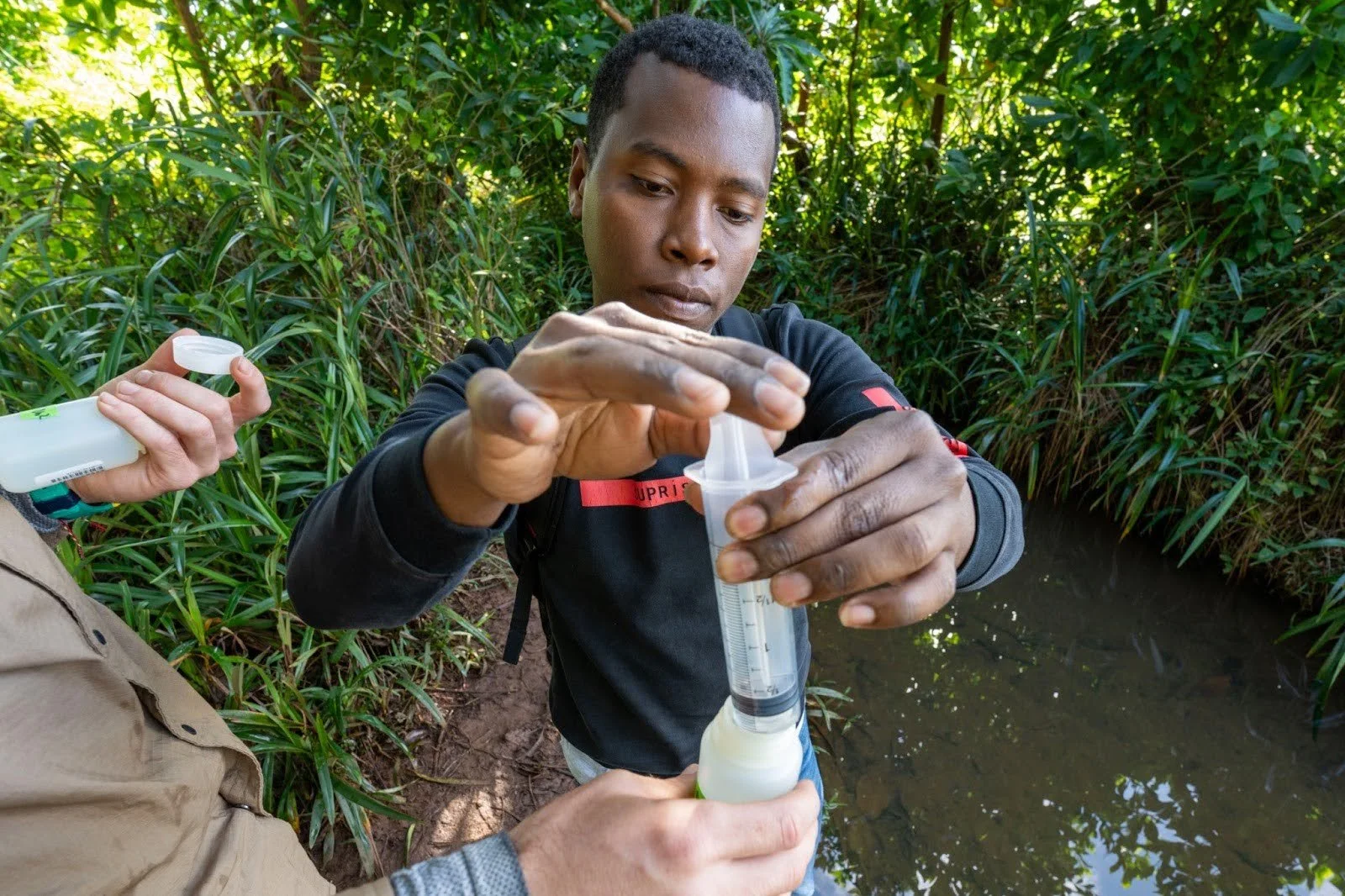
High levels of E. coli have been detected in drinking water near Madagascar's Manombo Special Reserve, according to a new watershed-level study published in Environmental Challenges. Led by Duke University researchers with support from Health In Harmony and local partners, the research establishes a critical dry-season baseline for water quality in southeastern Madagascar.
Titled “Water quality and hydrologic connectivity in rural communities around the Manombo Special Reserve of southeastern Madagascar during the dry season,” the study documents widespread fecal contamination in water sources used by more than 12,000 people across 11 rural villages. Alarmingly, researchers found that 94% of tested water sources contained E. coli levels above World Health Organization safety standards—posing serious health threats, including diarrheal disease.
“Most of the current water sources in Manombo are unregulated surface waters and are not suitable for drinking," said Ryan Parks, lead author and graduate researcher at Duke University’s Nicholas School of the Environment. “In places like Southeastern Madagascar, water quality is shaped by land use and sanitation access. To address this situation, we have been piloting the development of tanks that capture and store rainwater and are assessing the efficacy of these tanks in providing safe drinking water.”
Mapping of watershed flow revealed that some drinking water sources sit downstream from areas used for bathing and waste disposal, increasing the risk of contamination. These risks are heightened by seasonal droughts and increasingly severe cyclones, which dry up critical water sources and amplify flooding.
The study found that most rural communities rely on first-order tributaries—ephemeral, unregulated surface water sources—highly susceptible to contamination by both human and animal waste. In 2022, Cyclone Batsirai destroyed essential water infrastructure in Maropanahy, forcing residents to drink contaminated water and resulting in widespread illness.
“Water security, forest conservation, and public health are inseparable. Our study found that 94% of community water sources exceeded WHO standards for E. coli, driven by deforestation, climate shocks, and inadequate sanitation. Investing in community-designed solutions that protect rainforests, strengthen watershed resilience, and expand clean water infrastructure is critical for health and climate adaptation” said Dr. Sakib Burza, MD, PhD, Chief Health & Innovation Officer for Health In Harmony.
Health In Harmony, in partnership with FAMI (“Health In Harmony” in Malagasy) and local partners, including Tatirano and Zarasoa, works to reduce preventable diseases and strengthen ecosystem resilience in Madagascar. This new research provides a vital baseline to inform future interventions and funding in climate-affected regions.
This publication marks the first in a series of collaborative research efforts between Health In Harmony and Duke University. Later this year, the organizations will investigate how seasonal dynamics and coastal changes affect water safety and local communities will lead the design to improve water security, backed by Health In Harmony.