
New research: Malaria rebounds within years of the control programme ending, leaving rural communities exposed in the Amazon Rainforest in Brazil
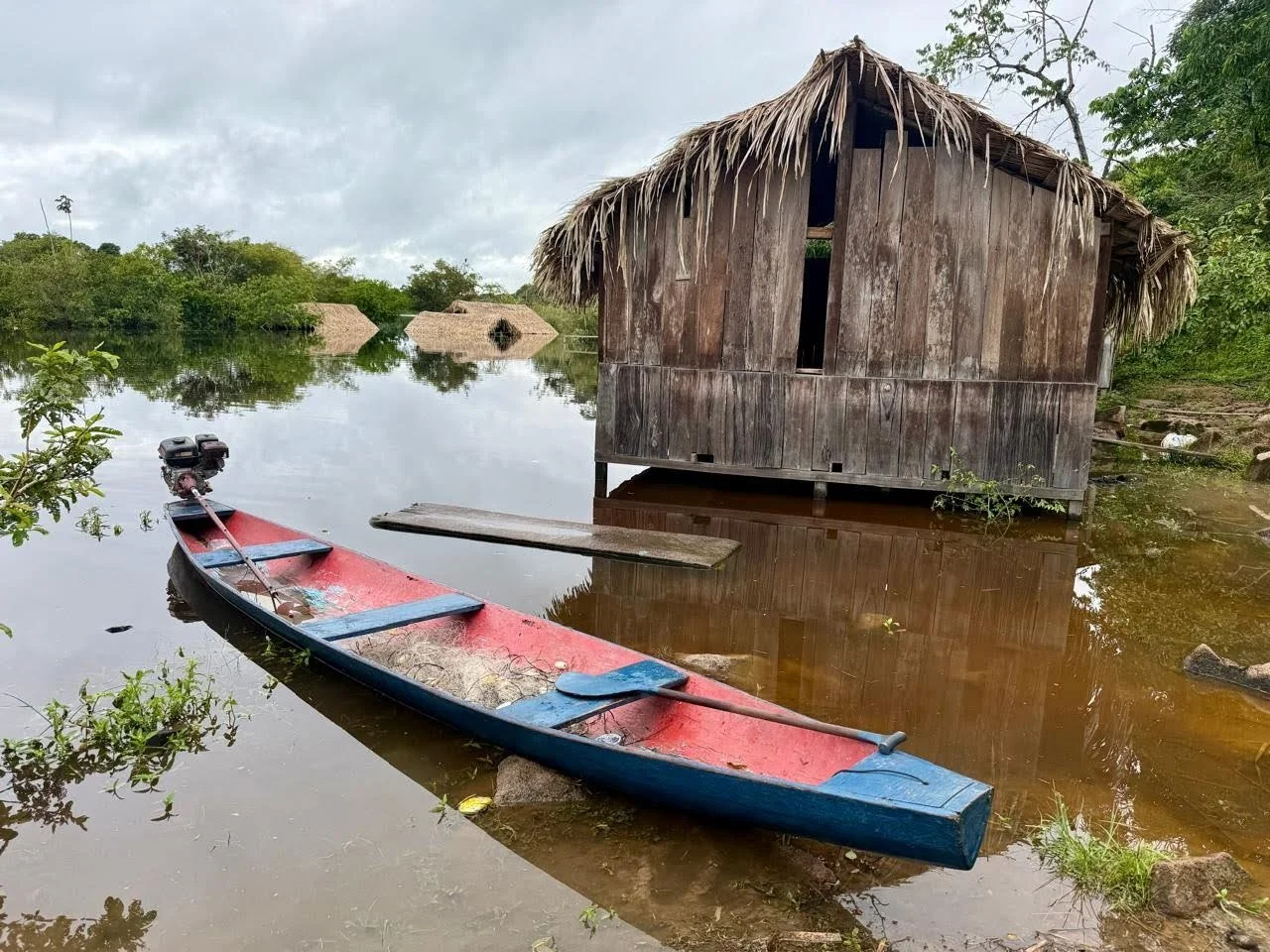
Community Praia do Anfrísio, February 2025. Photo: Sabrina Simon
A new study tracking malaria across 15 years in a large Amazon municipality has found that the disease can rebound swiftly once control programmes are withdrawn, resurging from near-elimination to hundreds of cases within just a few years. The data shows how fragile malaria control gains can be, and why consistent public health investment and attention to the forest environments where transmission thrives must be sustained.
The research, from SAMA Health In Harmony Brazil, Stanford University, The University of Queensland, the Federal University of Pará, and the London School of Hygiene and Tropical Medicine, is due to be published in GeoHealth on July 9th 2026.
The study focused on Altamira during the construction of the 3rd largest dam in the world, the Belo Monte Dam. The environmental licensing required that dam developers provide an improvement in services to meet the needs of the growing population. As part of a mandatory mitigation plan, a dedicated malaria control programme reduced cases across the region from more than 1,200 per year to fewer than 60 during construction. When it ended, malaria returned only in rural communities, reaching over 700 cases by 2020. Researchers analysed data from 150 health centres and examined what environmental and social factors drove transmission, both before the programme (2006–2011) and after the resurgence (2017–2020).
Crucially, the programme worked not by building new infrastructure, but by adequately funding Brazil's existing public health system (SUS), paying salaries and transport costs so community-trained health workers could reach remote populations.
The study adds to a growing body of evidence linking deforestation to malaria risk, but goes further: it identifies the forest edge perimeter, the boundary created when forest is fragmented, as a persistent, strong predictor of transmission across both periods studied. The resurgence occurred precisely at the intersection of forests and rural communities, where ecological risk is highest, and health system reach has historically been weakest.
Brazilian context
Brazil has made significant strides against malaria in recent decades and has set an ambitious national target of eliminating the disease by 2035. The findings from Altamira challenge what will be needed to reach this goal. Even a local interruption of control efforts in one municipality can quickly reverse progress. Rural, forest-edge communities face a constant risk that requires ongoing focus, not just campaigns tied to development timelines.
Global context
Elimination efforts have achieved real progress globally, but not uniformly, and some areas are facing serious resurgence. The Altamira findings illustrate a broader lesson: where a strong environmental link to transmission exists, human-focused interventions alone are not enough, and risk does not disappear when a control programme ends.
Additional key findings
Cases resurged almost exclusively in rural clusters. Urban Altamira remained largely protected, likely due to better access to healthcare and prevention tools.
Population size was a strong, consistent predictor of case numbers throughout the study period.
Temperature and rainfall did not explain variation in cases, as the Amazon remains climatically suitable for malaria year-round.
No Plasmodium falciparum infections, the deadlier malaria strain, have been reported in Altamira since 2014; the resurgence has been driven entirely by P. vivax.
“The data tells a clear story: malaria didn’t come back everywhere, but at the forest edge. It reflects a persistent ecological risk that existing knowledge already pointed to. We have known for years that deforestation and malaria are linked, but that knowledge hasn’t consistently translated into how control programmes are designed. As Brazil works towards eliminating malaria by 2035, and as other malaria-endemic regions face similar pressures, the message from Altamira is that environmental factors cannot be treated as background context. They need to be built into the response from the start.”
“SAMA has worked alongside these communities for years, and what we see in this data reflects what people on the ground already knew: when the programme ended, the disease came back, and it came back to them, not to the city. Rural, forest-edge communities were never the priority of the Belo Monte control effort; they were its afterthought. The public health strategy that protects them exists, and it works when it is funded. What this study shows is that when funding stops, it is always the most remote, most marginalised communities who are left to face the consequences alone.”
“Malaria is caused by parasites transmitted through mosquito bites, so the risk is very high when people stay outside late at night. To reduce illegal logging, the key is law enforcement. Malaria disappeared for many years, but in the last three years it has returned with many cases, especially in Anfrisio. The first sign of the change was the return of garimpo activity, even though it is not operating now.”
“The risk is very high. Malaria has decreased, and the most important changes have been treatment, SAMA support, and better access to care.”