
Key Takeaways from SP Climate Week 2026
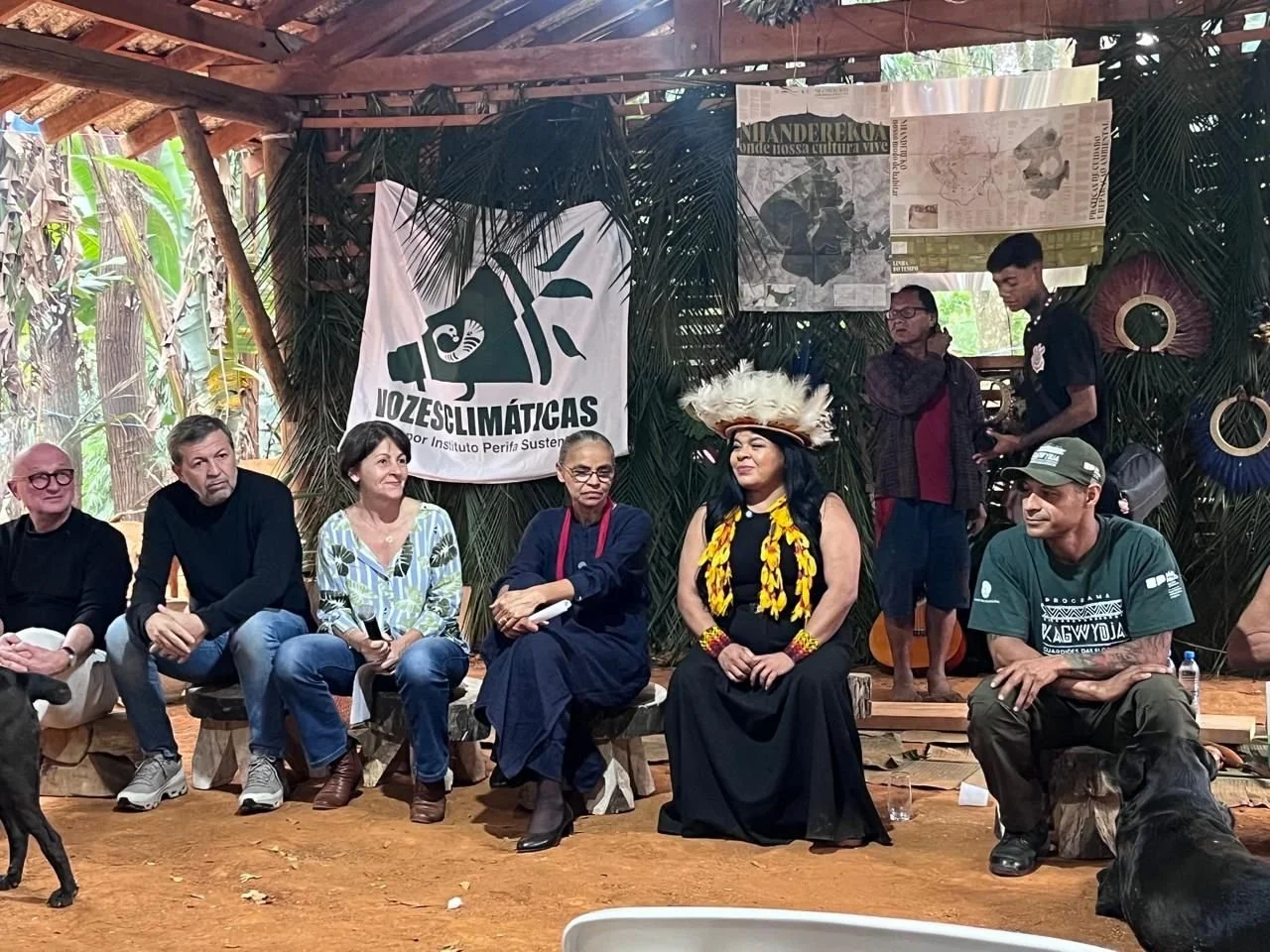
Photo kindly provided by SAMA-HIH.
Reflections from João Marcelo Sandreschi, Director of Institutional Relations at Health In Harmony’s Brazilian affiliate Instituto Saúde na Amazônia (SAMA-HIH), on his participation in São Paulo Climate Week 2026. You can follow SAMA on Instagram here and on LinkedIn here.
From August 3rd to 7th, São Paulo hosted SP Climate Week. João Sandreschi attended on behalf of SAMA, Health In Harmony’s Brazilian affiliate, participating in sessions on bioeconomy finance, Indigenous territories, international cooperation, and the legacy of COP30. His focus was to map fundraising opportunities while gaining a deeper understanding of how the sector is positioning itself, as well as where new financing and partnership mechanisms are emerging for organizations working at the intersection of health, territorial protection, and the forest economy.
1. Positioning before fundraising
Early in the week, the plenary session “Is Your Organization Ready for the International Stage?” offered an important reminder that engagement with international funders and partners begins long before a funding request is made. The discussion focused on how organizations communicate with different stakeholders and on the idea that positioning, rather than fundraising itself, is the starting point. For an organization like SAMA, which connects community health and territorial protection, a clear narrative is a strategic asset. Being able to communicate who the organization is, what it delivers, and why its work matters in a way that resonates with different audiences is what sustains long-term relationships.
2. New financing models for the bioeconomy
If positioning opens the conversation, financing turns it into something concrete. For João, this was the focus of one of the most valuable sessions of the week. “From Capacity Building to Capital: New Financing Models for Small Bioeconomy Businesses” presented approaches he intends to explore with Sebrae and BNDES, as well as with the National Bioeconomy Council. The message that resonated most with him was simple yet challenging: credit needs to adapt to the needs of entrepreneurs, rather than expecting entrepreneurs to adapt to financial models. Models that overlook the realities of people producing within the forest simply do not work.
For any financing structure to effectively reach the field, partnerships with organizations that are already deeply rooted in the territories are essential. Within this framework, philanthropic capital can position itself as a partner in the bioeconomy, recognizing that these businesses operate on narrow margins and face significant barriers to market access.
Another recurring question was how to measure impact, highlighting that impact measurement needs to be embedded in the investment design itself. In this context, Impact-Linked Finance (ILF) emerged as a promising mechanism, allowing, for example, interest rates or other financial conditions to be adjusted for funders and recipients that demonstrate positive impact. This session was particularly relevant to João’s resource mobilization work at SAMA and reinforced the importance of exploring financing structures beyond traditional grantmaking, including credit mechanisms, blended finance, and instruments that reward impact.
3. Indigenous territories at the center of the climate agenda
Any discussion about keeping the forest standing must consider the people who sustain and protect it. During the session “Indigenous Territories: Ancestry and Climate Justice,” João had the opportunity to meet activist and environmentalists Sônia Guajajara and Marina Silva. Both emphasized the demarcation of Indigenous lands as one of the most effective forms of environmental conservation, noting that many of the best-preserved areas with the lowest deforestation rates are located within Indigenous territories.
The message was clear: keeping the forest standing requires ensuring that Indigenous Peoples are protected and empowered, with access to income-generating opportunities and their basic needs met. Forest conservation depends on the well-being and rights of the people who inhabit and protect these territories. João also took away an important warning: this is a political agenda, and without sustained advocacy led by civil society, progress can lose momentum with each change in government.
4. International cooperation connected to territories
International cooperation brought another perspective. The session “International Cooperation: Partnerships to Accelerate Climate Action” drew João’s attention to the Deutsche Gesellschaft für Internationale Zusammenarbeit (GIZ)’s work within the Bioeconomy 4 Forests (B4F) programs, which support socially and ecologically just economic initiatives in forest and settlement areas across the Amazon. These initiatives are directly connected to SAMA’s geographic areas of operation. The discussion also highlighted community funds, which may represent a concrete financing alternative for the organization.
5. The legacy of COP30
The closing event at Casa Amazônia addressed key legacies of COP30 and brought together representatives from different initiatives across the region, including entrepreneurs, researchers, and cultural actors. It served as a reminder that the future of the Amazon is being shaped by a diverse ecosystem of actors rather than by any single sector.
Planetary health as a path forward
João leaves SP Climate Week with a clearer conviction: the planetary health agenda – which brings together access to healthcare for vulnerable populations in the Amazon, support for livelihood initiatives led by Indigenous and riverine communities, and the scaling of bioeconomy credit markets – is strategically important and well positioned in Brazil, even as the agenda faces political polarization.
One of the challenges is that financing mechanisms do not always integrate philanthropic capital effectively, creating a disconnect between funders and the realities and needs on the ground. Processes often remain highly bureaucratic and procedural, without adequately reflecting local contexts. This is where organizations that can operate as an “umbrella,” such as SAMA, have a strategic role to play by bridging these two worlds.
To fulfill this role effectively, SAMA needs to remain attentive to emerging financing mechanisms beyond traditional grant-based philanthropy, including credit structures for entrepreneurs, blended finance, and ILF, while strengthening its capacity for impact measurement to demonstrate the value of its work and sustain long-term partnerships. Ultimately, keeping the forest standing depends on strong communities, access to healthcare, and locally generated income – and SAMA’s role is to help ensure that financing reaches the places where the forest actually stands.