
Panama
Biodiversity
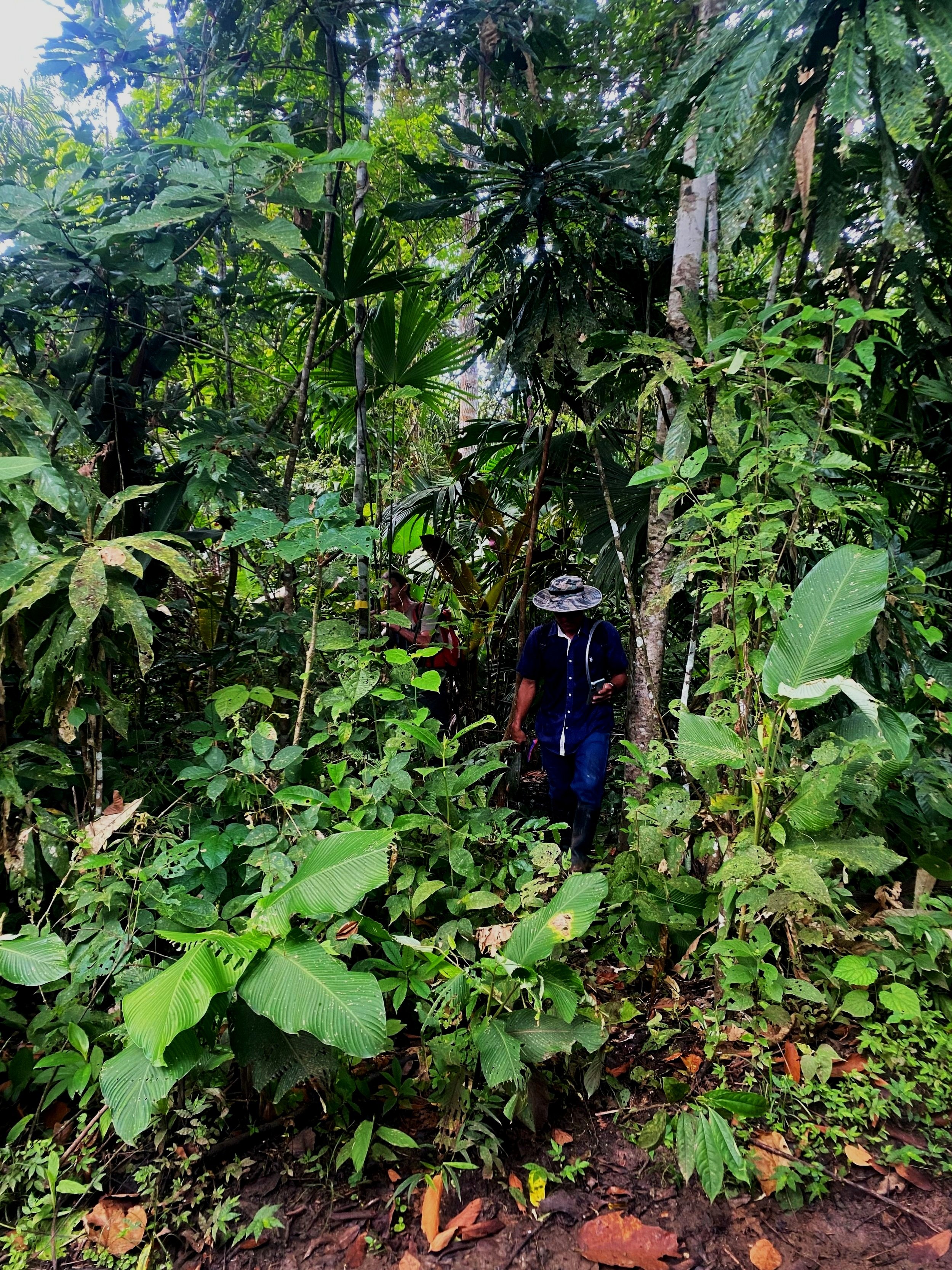
Covering over 40% of Panama, the Panamanian rainforest is rich in biodiversity and home to over 10,000 plant species. Two-thirds of this forest is located in Indigenous Peoples' territories.
Work to date
In 2024, Health In Harmony, Forest Stewardship Council, FSC Indigenous Foundation, IDB Lab, Savimbo, WildMon, USAID, and Woodwell Climate Research Center have came together to support the rainforest communities that have long been and continue to protect these vital ecosystems and habitats. Our three-year collaborative project, “Boosting Indigenous nature-based business models,” began in August 2024 with the Indigenous communities of Puerto Lara, Emberá Púru, Alto Playon, and Arimae with biodiversity monitoring activities. Health In Harmony’s role was to provide technical expertise in Monitoring, Reporting, and Verification (MRV). Working with leading research partners and through audiovisual storytelling with the Community Thriving Narrative (CTN) led by If Not Us Then Who, the project established a strong baseline for ecosystem health while amplifying community voices and conservation practices.

Ongoing Impact
We are partnering with 2,600 Indigenous community members who collectively safeguard over 18,000 hectares of tropical forest in the Darién region. These lands are critical habitats for some of the Americas' most endangered species, including jaguars, tapirs, and the Harpy Eagle, with monitoring revealing that communities safeguard 15 threatened species. Part of these lands were retaken by their original owners only a few decades ago and need their protection to achieve full ecosystem recovery and carbon sequestration. The findings are striking: camera traps recorded 73 unique species, including three umbrella species — jaguar, Baird’s tapir, and crested eagle — signaling a functional yet vulnerable ecosystem. The Darién also emerged as a vital stopover for 11 migratory bird species, underscoring its global ecological significance.
Research
Biodiversity Monitoring: As a comparative analysis, Health In Harmony is working with community members to simultaneously deploy two methods of biodiversity monitoring to understand which methods work best for the communities. One method is bioacoustic data collection in a structured month-long grid, allowing for AI analysis to identify species and the calculation of metrics such as species activity and occupancy. The second is camera data collection conducted continuously by one member of each community, providing ongoing presence/absence data about 16 totemic indicator species determined by Indigenous science and published literature. Monitoring also revealed that 81% of detected bird species are forest specialists critical to canopy integrity. Communities have full control of the data they generate and may choose to develop credits for the voluntary biodiversity market. By uniting MRV science, Indigenous knowledge, and community storytelling, the project demonstrates how biodiversity protection can directly strengthen sustainable local economies, ensuring that forest guardians benefit while safeguarding the rainforest for future generations.