
Interview: The BMJ Spotlights SAMA Doctors in Brazil
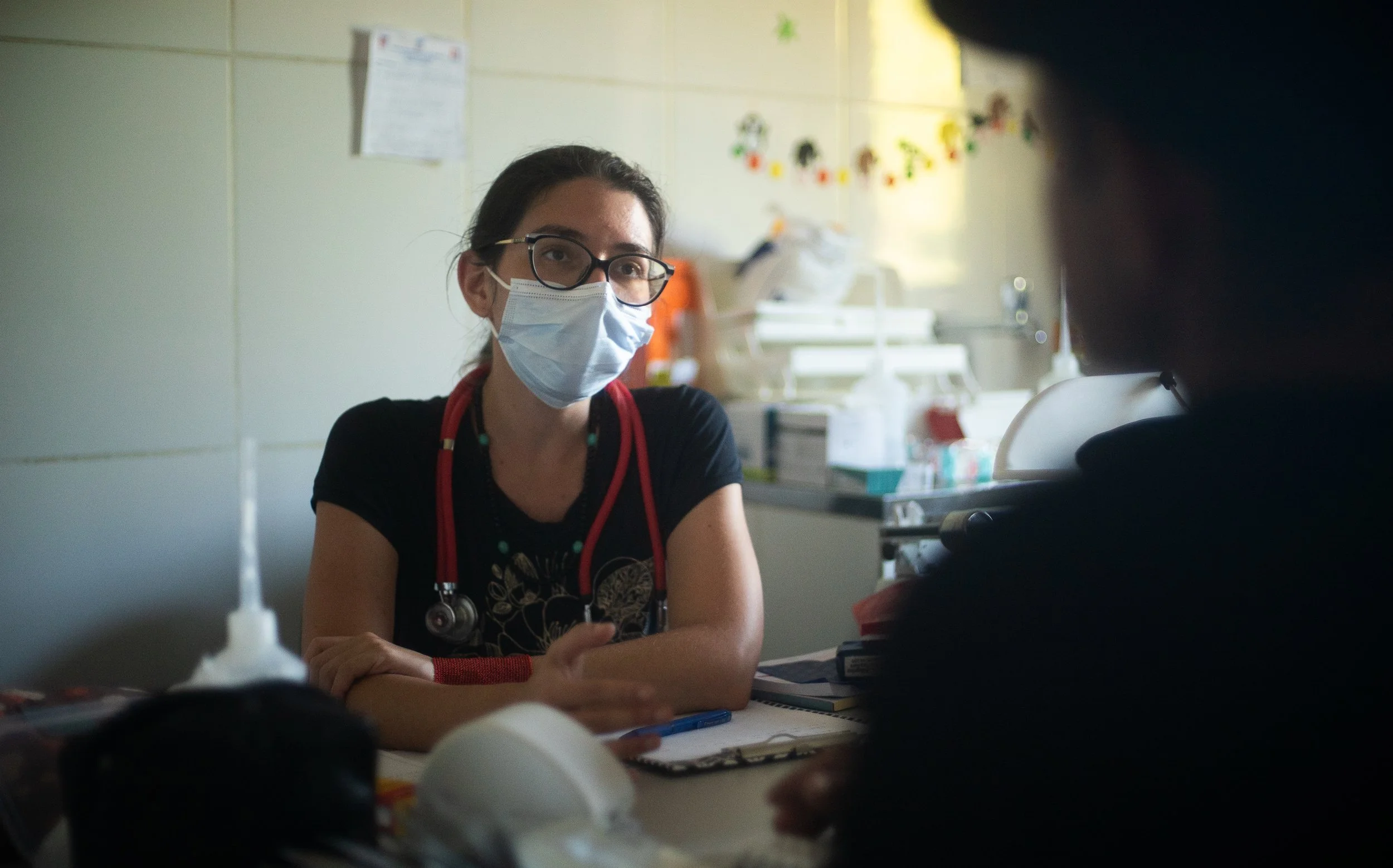
With Brazil currently hosting COP30, The British Medical Journal has published an interview with Health In Harmony partner SAMA’s medical coordinator, Dr. Érika Pellegrino, on working with the rainforest communities in Brazil worst affected by the climate crisis.
As the interview notes, for Pellegrino, the Covid-19 pandemic was a turning point: with lockdowns restricting movement, rainforest communities were no longer able to travel to access the much needed healthcare concentrated in Brazil’s urban areas. After joining Health In Harmony in 2019, she began tackling the barriers to healthcare faced by these communities.
Pellegrino witnessed how climate change and health are cyclically linked. Climate change causes poor health and at the same time poor access to healthcare forces Indigenous Peoples to relocate, leaving their land vulnerable to environmental harm and unprotected from deforestation.
Healthcare, displacement, and rainforest protection
“If someone in your family is sick and you don’t have access to proper healthcare then people feel like they can’t live there, so they leave the area,” Pellegrino says. This has two main consequences: it leaves those parts of the rainforest unprotected and it generally worsens the mental health of the person.
By living on and tending the land, rainforest communities protect it from deforestation and other harmful activities. When they no longer feel able to stay—or in some cases are forced to leave—their mental health worsens as they feel a reduction in their quality of life, as well as a sense of being cut off from their way of life.
To tackle these problems, Pellegrino, as medical coordinator for Health In Harmony’s partner SAMA, works as part of a team that delivers vaccines, running regular medical care expeditions, and providing a fund to help cover the cost of trips to cities to access healthcare.
Early warning systems for climate shocks
As well as providing critical medical care as a means to combat displacement and improve the physical and mental wellbeing of Indigenous communities, SAMA is working to reduce the impact of the climate crisis on rainforest communities through the development of an early warning system for extreme weather events.
The system, which is still being developed, will provide advice and support to keep people safe, and also ensure that health teams are ready to help if needed. “For instance, when there are forest fires we want to be prepared and have the right equipment and treatments ready.”
“We don’t have these separations between what’s healthcare, what’s livelihood, and what’s thriving,” Pellegrino explains. “In Brazil, we use a concept called ‘well living.’ Well living comes from the indigenous concept of the interconnectedness of being healthy and being able to reproduce your way of living and teach younger generations to be spiritually connected with the environment.”
Read the full article on the BMJ website. To hear more news on climate justice and planetary health, sign up for Health In Harmony’s newsletter today.